Contact Us

Contact Us

Guangzhou Huaisheng Packaging Co.,Ltd.
We provide customers with quality products and provide high-quality services.
If you would like to leave us a comment please go to contact us
+86-18122240089

In the fast-paced world of product packaging, even small mistakes in your custom packaging box process can lead to massive cost overruns, shipment delays, and brand damage. According to Statista (2024), global packaging waste costs businesses over USD 120 billion annually, with nearly 30% of losses attributed to design and production errors.
One of the most common mistakes is failing to ensure precise box dimensions. A minor size mismatch can lead to product damage or increased shipping costs.
Best Practice:
Always request sample prototyping before mass production.
Use 3D design proofs to confirm inner fit for product protection.
| Comparison | Accuracy | Cost Impact | Waste Reduction |
|---|---|---|---|
| Manual measurement | ⭐⭐ | High | Low |
| CAD structural design | ⭐⭐⭐⭐⭐ | Low | High |
| Prototype testing | ⭐⭐⭐⭐ | Medium | High |
Many businesses assume “more design = better packaging.” However, excessive printing or non-standard die-cuts can increase costs and cause printing errors.
According to The Dieline (2025), 37% of failed packaging campaigns result from overcomplicated designs that compromise readability or production efficiency.
Avoid this pitfall by:
Keeping your artwork simple and brand-consistent.
Avoiding too many special finishes (e.g., foil, UV, emboss) in one layout.
Running a proof printing test before the bulk order.
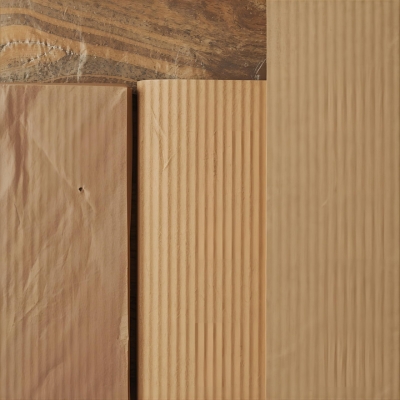
Your packaging material directly affects product protection and brand sustainability. Many buyers overlook how material thickness (GSM) and paper type influence durability.
| Material Type | Strength | Sustainability | Cost |
|---|---|---|---|
| Corrugated board | ⭐⭐⭐⭐⭐ | ⭐⭐⭐⭐ | ⭐⭐⭐ |
| Rigid paperboard | ⭐⭐⭐⭐ | ⭐⭐⭐⭐ | ⭐⭐⭐⭐ |
| Folding carton | ⭐⭐⭐ | ⭐⭐⭐⭐ | ⭐⭐ |
Recommendation:
Perform drop and compression testing to ensure safety during shipping.
External source: lS0 12048-Compression Test Standard

Hidden costs are a silent killer in packaging projects. Not discussing MOQ (Minimum Order Quantity), setup fees, or print plate costs early can break your budget.
Best Practice Checklist:
Ask for a complete quotation, including printing setup and shipping.
Use a supplier with transparent pricing policies.
Avoid last-minute design changes that trigger reprints.
According to Grand View Research (2025), companies that establish clear supplier communication reduce production delays by 28%.
Many brands skip this stage to save time — a costly mistake. Each box batch must go through visual inspection, printing alignment checks, and folding tests.
QC Process Ranking (Effectiveness):
| Process | Accuracy | Recommended |
|---|---|---|
| Manual inspection | ⭐⭐⭐ | ✅ Good |
| Automated camera inspection | ⭐⭐⭐⭐⭐ | ✅✅ Best |
| Random sampling only | ⭐⭐ | ❌ Risky |
External Reference: Quality Assurance Institute - Packaging QC Guidelines

The success of your custom packaging box process depends not on speed, but on precision and consistency.
By avoiding these five pitfalls — inaccurate sizing, design overload, weak material choice, poor communication, and missing QC — your brand can save thousands in production costs while enhancing customer satisfaction and sustainability.
1. What’s the best way to verify box dimensions before production?
Request a die-line template and prototype sample for measurement validation.
2. How do I choose the right packaging material?
It depends on product weight and shipping needs; corrugated for heavy items, rigid for premium boxes.
3. What’s the MOQ in custom packaging?
MOQ stands for Minimum Order Quantity. It ensures efficiency in printing setup and reduces waste.
4. How can I prevent color differences in printing?
Use Pantone matching and request digital or offset proof before production.
5. Why is quality control important in packaging?
It guarantees your boxes are consistent in size, color, and structure — reducing return rates.