Contact Us

Contact Us

Guangzhou Huaisheng Packaging Co.,Ltd.
We provide customers with quality products and provide high-quality services.
If you would like to leave us a comment please go to contact us
+86-18122240089


Bottom line/core conclusion (first paragraph): Choose your paper packaging material by matching product protection needs, brand presentation, sustainability goals, cost constraints, and supply-chain realities. For fragile, heavy, or shipped products, corrugated (single- or double-wall) material usually wins for protection. For retail-facing consumer goods where print quality and shelf presence matter, paperboard / folding cartons are often the best choice. If sustainability and recycled content are top priorities, Kraft / recycled containerboard is the smart trade-off. Use a short decision checklist (protection → presentation → sustainability → cost → testing) to make the final choice.
According to a Grand View Research report, the global paper packaging market reached USD397.5 billion in 2024 and is expected to maintain steady growth over the next decade due to rising e-commerce and sustainability awareness.
The global paper packaging market is large and continues to grow — estimated at around USD 397.5 billion in 2024, with a mid-single-digit CAGR projected through the decade, driven by e-commerce and sustainability demand.
Recycling and regulatory pressure amplify the importance of material selection: European paper and board recycling rates reached record levels recently (about 79.3% in 2023), and U.S. cardboard recycling is also high (U.S. paper recycling ~65–69% of recoverable paper in recent AF&PA reporting). These figures make recyclable paper packaging an attractive, often required, choice.
Data from the UNECE/FAO Forest and Paper Database a shows consis
tent growth in paperboardand containerboard production, highlighting the material's vital role in global packaging supplychains.
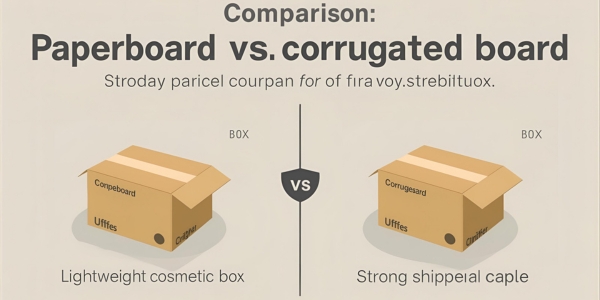
Below are three common paper packaging families you’ll encounter — their strengths, weaknesses, and a simple ranking for common scenarios.
Pros
Excellent cushioning and stacking strength (single-, double-, or triple-wall options).
Cost-effective for bulk shipping; customizable flute profiles.
High recycled content and widely recycled.
Cons
Lower print/finishing quality compared with folding cartons (needs outer sleeve or printed liner for a premium look).
Bulkier (higher volumetric weight for shipping).
Pros
Smooth surface for full-color printing, finishing (foil, emboss), and premium brand presentation.
Lightweight, ideal for cosmetics, food boxes, and consumer electronics inner boxes.
Cons
Less protective than corrugated for shipping; often needs internal inserts/protection.
Depending on grade, lower recycled content or lower strength.
Pros
High recycled fiber content, rustic “eco” look, and great for brands that emphasize circularity.
Usually cost-competitive and widely accepted for corrugated liners and simple boxes.
Cons
Print quality is lower than coated paperboard; finishes are limited without extra treatments.
Strength varies—may not match virgin kraft for heavy items.
Pros
Smooth surface for full-color printing, finishing (foil, emboss), and premium brand presentation.
Lightweight, ideal for cosmetics, food boxes, and consumer electronics inner boxes.
Cons
Less protective than corrugated for shipping; often needs internal inserts/protection.
Depending on grade, lower recycled content or lower strength.
Pros
High recycled fiber content, rustic “eco” look, and great for brands that emphasize circularity.
Usually cost-competitive and widely accepted for corrugated liners and simple boxes.
Cons
Print quality is lower than coated paperboard; finishes are limited without extra treatments.
Strength varies—may not match virgin kraft for heavy items.
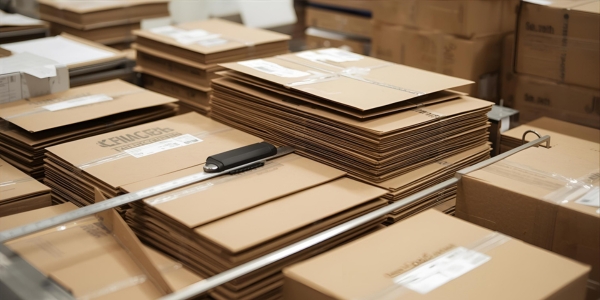
Ask: Is the product fragile? Heavy? Does it stack in warehouses? If yes → favor corrugated (single- or double-wall depending on weight). For light, shelf-only items → paperboard. Use corrugated for e-commerce outer boxes and paperboard for retail cartons. (Why: corrugated’s flute and liner construction provide compression resistance and cushioning.)
If brand image relies on high-fidelity graphics, soft-touch coatings, or metallic foils, choose paperboard / folding cartons or a corrugated box with a printed sleeve. Specify coating and varnish options to your supplier and check sample prints before mass production.
Use authoritative recycling rates and regional mandates to guide choices. In regions with strong paper recovery systems (EU, parts of North America), paper-based packaging often has better end-of-life credentials than mixed-material alternatives. Specify recycled content targets (e.g., 30–100%) and validate claims with supplier RAP (recovered paper) certificates.
The Confederation of European Paper Industries (CEPl) reported that European paper and board recycling rates hit 79.3% in 2023, making paper packaging one of the most circular materials in global use.
Don’t optimize material cost in isolation. Heavier packaging (or high-volume corrugated) can increase shipping bills; extra inner protection or secondary packaging for paperboard items also adds cost. Create a per-unit total-cost spreadsheet comparing 3–4 material scenarios.
Ask suppliers about minimum order quantities, lead times, die-cut costs, and pre-press requirements. Complex structural boxes (creative structural boxes) have higher tooling costs but can deliver brand differentiation.
Order functional prototypes and run:
Drop and vibration tests for shipped items
Compression tests for stacked pallets
Print samples in the final substrate and finish
| Scenario | Best material | Why |
|---|---|---|
| E-commerce shipping / fragile item | Corrugated (single/double-wall) | Protection, stacking strength, and recyclability. |
| Cosmetic/retail shelf product | Paperboard / folding carton | High print quality, premium finishing. |
| Low-cost, sustainable shipping | Kraft / recycled containerboard | High recycled content, good recyclability. |
Run a short audit: pick three SKUs and map protection, presentation, and shipping needs.
Request samples: one corrugated, one coated paperboard, one recycled kraft — evaluate print, strength, and weight.
Get one lab test: drop/compression for your heaviest SKU.
Document sustainability claims: request supplier data sheets (recycled %, certifications) to include on product pages.