Contact Us

Contact Us

Guangzhou Huaisheng Packaging Co.,Ltd.
We provide customers with quality products and provide high-quality services.
If you would like to leave us a comment please go to contact us
+86-18122240089


Gift boxes are no longer just containers — they are a strategic mix of protection, branding, sustainability and customer experience. Choosing the right gift box type, materials and finishing can reduce damage rates, improve unboxing impressions, and increase repeat purchase rates. Investing thoughtfully in gift packaging pays off in both brand perception and cost-efficiency.
The packaging industry is large and growing: the global packaging market exceeded USD 420 billion in 2024, and demand for premium, sustainable packaging continues to rise. (Source: Statista — Packaging market overview). E-commerce growth further amplifies the role of gift boxes because online buyers judge brands by the unboxing moment. Meanwhile, paper-based packaging enjoys high recyclability rates — paper packaging recycling is one of the strongest performers among materials. (Source: U.S. EPA — materials and recycling statistics). Industry commentaries from Packaging Europe and the Sustainable Packaging Coalition also highlight two clear trends: personalization and sustainability are the top drivers shaping gift packaging design.
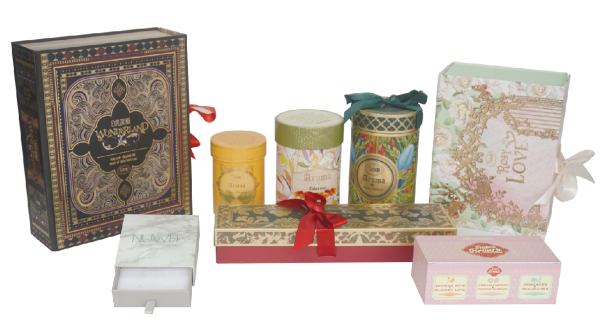
To make decisions faster, here are three commonly used gift box types, their strengths/weaknesses and a simple rank for different goals (Branding / Protection / Cost-efficiency).
| Type | Pros | Cons | Best for | Rank (Brand / Protection / Cost) |
|---|---|---|---|---|
| Rigid (setup) box — e.g., magnetic closure | Premium feel, excellent structure, great for luxury branding | Expensive, heavier, higher shipping cost | Luxury perfumes, jewelry | Brand ★★★★★ / Protection ★★★★☆ / Cost ★★☆☆☆ |
| Corrugated / Mailing gift box — strong mailer | Lightweight, strong for transit, economical in bulk | Less “lux” finish unless wrapped or sleeved | E-commerce gifting, subscription boxes | Brand ★★★☆☆ / Protection ★★★★★ / Cost ★★★★☆ |
| Kraft / Paper gift box & bags — simple print | Affordable, eco-friendly look, easy to customize | Lower protection for fragile items | Retail bags, floral, small gifts | Brand ★★★★☆ / Protection ★★☆☆☆ / Cost ★★★★★ |
Which to choose?
If you sell fragile, high-value items (perfume, jewelry), prefer rigid boxes.
If you ship many units and need protection, corrugated mailers offer best value.
For low-cost, eco-focused brands or in-store gifting, kraft/paper is ideal.
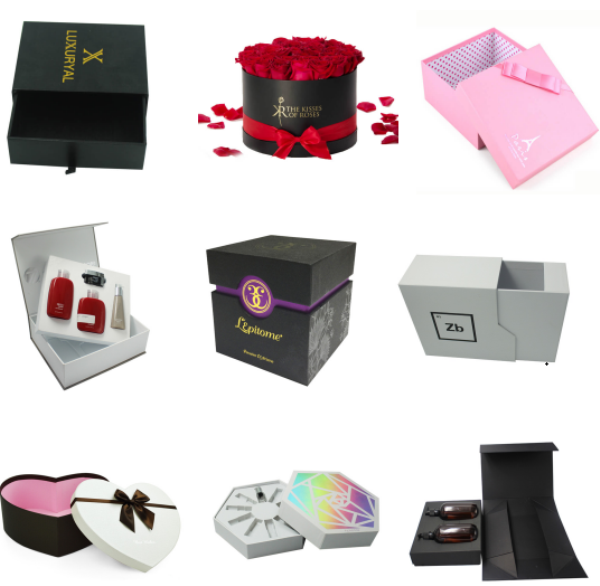
Below are the practical steps to guide product teams, ecommerce owners and designers.
Decide whether the box’s primary job is to impress (brand experience) or protect & ship (logistics). This decision narrows material and structure choices.
Common options: rigid chipboard, coated paperboard, corrugated board, kraft paper. Consider GSM/thickness, coating (soft-touch, matte), and whether you need moisture or grease resistance.
Options: magnetic lids, drawer boxes, foam or paper inserts, window cutouts. Internal inserts improve protection and perceived value.
Finishes like foil stamping, embossing, spot UV, and soft-touch lamination increase visual appeal but also add cost and lead time. For smaller budgets, consider partial foil or one-color embossing.
Always request a physical sample: check fit, finish, print color, and how the item survives a simulated transit/droptest.
Use recyclable or recycled content, water-based inks, and avoid unnecessary plastic inserts. Cite sustainable attributes on packaging to increase consumer trust (many shoppers now prefer eco-friendly packaging — see EPA & SPC).
Oversized boxes raise freight and storage costs. Work with your supplier to optimize nesting, flat-pack storage, and container loading efficiency.
Use this snapshot to match priorities (use 1–5 scale, 5 = best):
| Priority | Rigid Box | Corrugated Mailer | Kraft Paper Box |
|---|---|---|---|
| Perceived luxury | 5 | 3 | 3 |
| Transit protection | 4 | 5 | 2 |
| Sustainability (recyclability) | 3 | 4 | 5 |
| Unit cost (small runs) | 2 | 3 | 5 |
Standardize core sizes to lower tooling and die costs.
Use modular inserts so one internal die fits multiple SKUs.
Test for storage & shipping metrics (CBM) to avoid surprise freight increases.
Tell the story on the box (origin/sustainability) — research shows packaging messaging increases repurchase intent. (See Packaging Digest / industry reports.)
Q1: Which gift box type offers the best protection for shipping?
A1: Corrugated mailing boxes (double-wall if heavy) provide the best protection-to-cost ratio for shipments.
Q2: Are custom gift boxes worth the investment?
A2: Yes — custom designs improve brand recognition and perceived value; many sellers see higher repeat buys when packaging feels premium.
Q3: How do I make gift boxes more sustainable?
A3: Use recycled paperboard, minimal coatings, water-based inks, and design for recyclability (avoid mixed materials).
Q4: How many samples should I request before mass production?
A4: Request at least two rounds: an initial prototype and a pre-production sample after print/finish settings are confirmed.
Q5: How can I reduce shipping costs related to gift packaging?
A5: Optimize box dimensions (reduce empty space), choose lighter materials with adequate protection, and standardize sizes for palletization.