Contact Us

Contact Us

Guangzhou Huaisheng Packaging Co.,Ltd.
We provide customers with quality products and provide high-quality services.
If you would like to leave us a comment please go to contact us
+86-18122240089


Flat paper box packaging is widely used across retail, e-commerce, cosmetics, and gift packaging because of its cost efficiency, storage convenience, and design flexibility. However, one of the most common questions buyers ask is: what type of paper is actually used for flat paper boxes?
Choosing the right paper affects not only appearance, but also durability, print quality, sustainability, and overall packaging cost. This guide breaks down the most common paper materials used in flat paper box packaging and explains how to select the right option for your product and brand.
A flat paper box is a paper-based packaging box that is shipped and stored in a flat, unfolded state and assembled when needed. It is commonly used for:
Cosmetic and skincare packaging
Lightweight gift boxes
Apparel and accessories
Subscription and e-commerce packaging
Flat paper boxes are typically made from paperboard, not corrugated board, and rely on folding lines and die-cut structures rather than thick walls.
Paper selection determines:
Structural strength and shape retention
Surface smoothness for printing
Compatibility with finishing techniques
Environmental performance and recyclability
Using the wrong paper can lead to box deformation, cracking at folds, dull print results, or higher damage rates during handling.
SBS paperboard is one of the most popular materials for flat paper box packaging, especially in premium markets.
Key characteristics:
Bright white surface
Smooth and uniform texture
Excellent print quality
SBS paper is widely used for:
Cosmetic packaging boxes
Luxury retail packaging
High-end gift boxes
Because of its clean appearance, SBS paperboard is ideal for brands that rely on strong visuals and detailed graphics.
Art paper is often used as a surface layer, laminated onto grayboard or white paperboard.
Advantages:
High color reproduction
Glossy or matte coating options
Compatible with foil stamping, embossing, and spot UV
This structure is common in flat paper boxes where branding impact is more important than heavy load-bearing strength.
Kraft paper is commonly chosen for flat paper boxes with a natural or eco-friendly image.
Features include:
Brown or natural appearance
Strong fiber structure
Recyclable and biodegradable
Kraft flat paper boxes are popular for:
Sustainable brands
Organic products
Minimalist packaging concepts
However, kraft paper has a rougher surface, which may limit high-detail printing.
CCNB paperboard has a white coated front and a gray back.
Key points:
Cost-effective material
Suitable for mid-range packaging
Acceptable printing on one side
It is often used for:
Mass-market consumer products
Promotional packaging
Short-term retail packaging
While economical, CCNB is not ideal for premium flat paper boxes due to lower stiffness and aesthetics.
Recycled paperboard is increasingly used for flat paper box packaging as sustainability becomes a priority.
Benefits:
Lower environmental impact
Supports circular packaging goals
Often FSC-certified
Recycled board works well for brands that prioritize environmental messaging, though print results may vary depending on fiber quality.
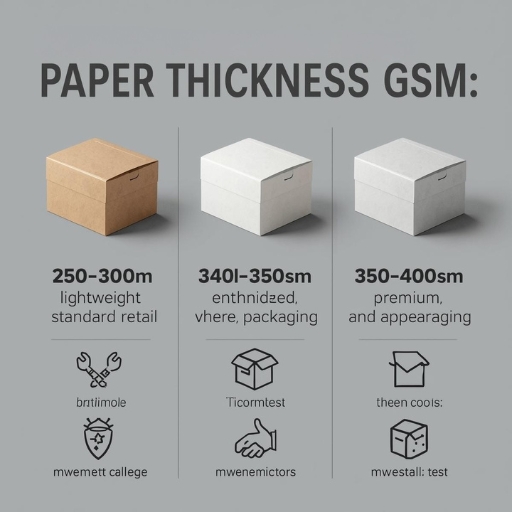
Paper thickness is usually measured in gsm (grams per square meter).
Typical ranges:
250–300 gsm: lightweight flat paper boxes
300–350 gsm: standard retail packaging
350–400 gsm: premium or structured flat boxes
Thicker paper improves rigidity but increases cost and folding resistance. A professional flat paper box manufacturer can recommend the best balance.
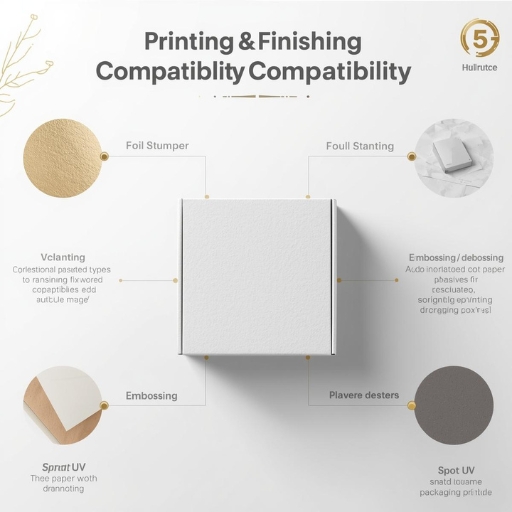
Not all papers respond the same way to finishing processes.
Best matches:
SBS paper → offset printing, foil stamping, embossing
Art paper → spot UV, matte/gloss lamination
Kraft paper → simple printing, debossing
Choosing the right paper ensures your flat paper box maintains both visual quality and structural integrity.
Many brands now require packaging that aligns with environmental standards.
Look for:
FSC-certified paper
Water-based inks
Mono-material paper structures
Organizations such as the Forest Stewardship Council (FSC) and the EPA provide guidance on responsible paper sourcing and recycling standards.
Ask these questions before deciding:
Is branding or protection more important?
Will the box be displayed on shelves or shipped?
Do sustainability certifications matter for your market?
Working closely with an experienced custom packaging manufacturer helps avoid costly redesigns.
Q1: What is the best paper for flat paper box packaging?
SBS paperboard is the most versatile option for premium appearance and printing quality.
Q2: Are flat paper boxes eco-friendly?
Yes. Most flat paper boxes are recyclable, especially when made with FSC-certified or recycled paper.
Q3: Can kraft paper be used for luxury flat paper boxes?
Yes, when paired with minimalist design and premium finishes.
Q4: Does thicker paper always mean better quality?
Not necessarily. Proper structure and design matter as much as thickness.
Understanding what paper is used for flat paper box packaging allows brands to make smarter decisions about cost, appearance, and sustainability. By matching the right paper material with your product and branding goals, flat paper boxes can deliver both practical performance and strong market appeal.