Contact Us

Contact Us

Guangzhou Huaisheng Packaging Co.,Ltd.
We provide customers with quality products and provide high-quality services.
If you would like to leave us a comment please go to contact us
+86-18122240089


When businesses ship goods internationally, one of the most common terms they encounter is CBM (Cubic Meter). Understanding CBM is essential not only for calculating freight charges but also for planning packaging, storage, and container loading. Whether you are a small business sending products abroad or a large-scale importer, understanding how CBM works can help you save significant costs and ensure smoother logistics.
CBM stands for Cubic Meter, a standard unit of volume used in global shipping. It measures the amount of physical space a shipment occupies, rather than its weight. Carriers rely on CBM to calculate how much cargo can fit inside trucks, ships, or planes.
Formula for CBM:
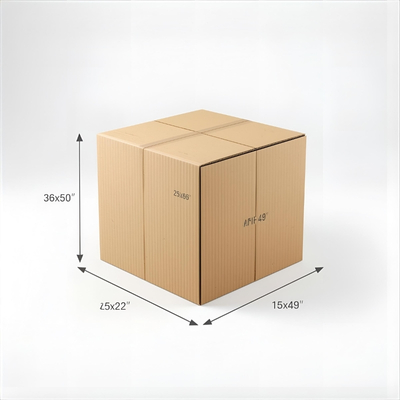
For example, a box that measures 100 cm × 50 cm × 50 cm = 0.25 CBM.
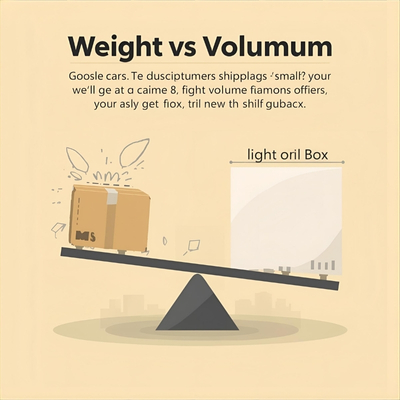
Freight companies charge based on volume weight (dimensional weight) or gross weight, whichever is higher. This means:
Heavy but small cargo (like metal parts) is charged by actual weight.
Light but bulky cargo (like pillows) is charged by CBM.
Understanding this balance allows shippers to optimize both packaging design and shipping budgets.
Ocean carriers often use the rule: 1 CBM = 1 metric ton (1000 kg).
It simplifies calculations for containers, but efficiency depends on how well cartons are packed.
Air cargo is stricter on volume. Typically, 1 CBM = 167 kg (volumetric weight).
If your shipment is light but bulky, expect to pay based on CBM.
Trucking services may calculate by CBM when moving large goods across borders.
In e-commerce fulfillment, CBM helps estimate warehouse space costs.
When shipping multiple boxes, CBM must be calculated individually and then added together.
| Carton Dimensions | CBM per Carton | Quantity | Total CBM |
|---|---|---|---|
| 30 × 30 × 30 cm | 0.027 | 2 | 0.054 |
| 50 × 50 × 50 cm | 0.125 | 3 | 0.375 |
| Grand Total | — | — | 0.429 |
This simple calculation helps businesses predict container usage and freight charges.
Efficient packaging design plays a vital role in reducing CBM. Some strategies include:
Collapsible packaging boxes that save space during transit.
Right-size packaging instead of oversize cartons.
Stackable box design to maximize container utilization.
Using lightweight but durable materials like corrugated cardboard.
By working with a custom packaging manufacturer, companies can reduce shipping costs while protecting goods.
Different containers have different maximum volumes. For instance:
20 ft container → ~28 CBM
40 ft container → ~58 CBM
40 ft HQ container → ~68 CBM
However, real-world loading capacity is often 80–85% of theoretical volume, due to irregular carton sizes or palletization. Proper CBM calculation helps prevent underutilized space and unexpected surcharges.

For buyers, mastering CBM brings several benefits:
Cost transparency – avoid hidden freight charges.
Better negotiation – with logistics providers on space allocation.
Improved supply chain planning – knowing exact volumes helps forecast container requirements.
Sustainability – reducing CBM means fewer containers shipped, lowering the carbon footprint.
CBM is more than just a calculation; it is a strategic tool in global shipping. By understanding how it works across sea, air, and land freight, businesses can reduce costs, optimize packaging, and streamline logistics. Whether you are shipping custom packaging boxes, electronics, or bulk commodities, mastering CBM ensures smarter decisions and stronger competitiveness in global trade.