Contact Us

Contact Us

Guangzhou Huaisheng Packaging Co.,Ltd.
We provide customers with quality products and provide high-quality services.
If you would like to leave us a comment please go to contact us
+86-18122240089

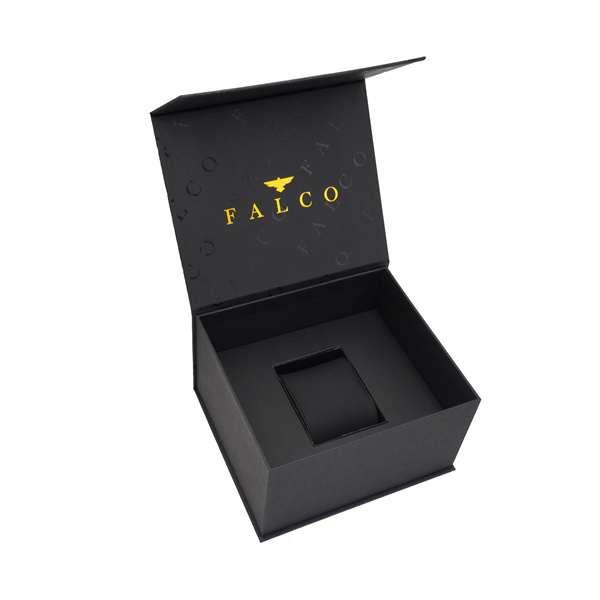
A watch sits differently in its box than almost any other product category: it needs a cushion or pillow insert that holds the watch face-up at a specific angle for display, secures the strap or bracelet without creasing it, and does all of this while looking as premium as the watch itself. Procurement in this category centers on cushion engineering as much as exterior finish.
This article is written for watch brands, jewelry retailers selling watches, and corporate gifting companies sourcing premium timepiece presentation boxes.
The first problem is using a generic pillow insert that does not match the watch case diameter or strap width, resulting in a loose fit that lets the watch shift during shipping. The second problem is choosing a cushion fabric or foam that creases or marks a leather strap or metal bracelet over time, which is a common source of customer complaints for premium watch packaging.
Buyers also frequently discover that a rigid box built for a single watch style does not accommodate a range of case sizes across a product line, requiring either multiple box sizes or a compromise insert design.
The target buyer includes watch brands launching new models, jewelry and accessory retailers selling watches alongside other products, and corporate gifting companies sourcing premium timepieces as client or executive gifts. Each should confirm case diameter and strap or bracelet type across their product range, since these directly determine cushion design.
Because watches are often purchased as gifts or investment pieces, buyers should prioritize insert material quality and cushion precision over cost savings, since a loose or marking insert undermines the premium positioning the product itself is built on.
Before sampling, buyers should confirm case diameter range across the product line, strap or bracelet type (leather, metal, rubber) and its sensitivity to marking, cushion material (velvet-wrapped foam, molded pillow, or fabric-covered), and box structure (rigid lift-off lid, hinged, or drawer). These parameters shape both fit and long-term product care.
A complete RFQ should include exact case and strap dimensions or physical watch samples, order quantity, and whether the box needs to accommodate multiple case sizes or a single model. Buyers should request that the factory test insert fit with an actual watch before finalizing production.
Cushion angle matters for display presentation — a slight tilt shows the watch face more attractively than a flat-lying cushion, but the angle needs to be engineered so the watch does not slide when the box is opened or closed. Cushion fabric should be tested against the actual strap material, since some fabrics can transfer color or texture marks onto light-colored leather over time.
For product lines spanning multiple case sizes, buyers should decide whether to standardize on one cushion size with some tolerance, or produce size-specific inserts, weighing tooling cost against fit precision.
The following internal links can be used inside the article body or at the end of the article to guide visitors toward relevant product pages:
Buyers should send an actual watch sample, including the strap or bracelet, so the factory can test cushion fit and confirm the material does not mark or crease the strap over time. For product lines with varying case sizes, deciding early whether to standardize cushion tolerance or produce size-specific inserts avoids a late redesign.
Huaisheng engineers watch cushion inserts around actual case and strap dimensions, with fabric options tested for compatibility with leather and metal straps. We recommend sample testing with a real watch before committing to bulk production.
With some tolerance, a single cushion design can accommodate a modest size range, though a wide range of case sizes may need size-specific inserts for a secure fit.
Some fabrics can transfer marks or texture onto light-colored leather over extended contact; testing the actual strap material against the cushion fabric is recommended before bulk production.
Rigid lift-off lid and hinged-lid boxes are most common, chosen for the weight and durability expected in premium watch presentation packaging.
Watch packaging sourcing depends on cushion engineering precise enough to secure the watch and protect the strap, matched to a rigid exterior that reflects the product's premium positioning. Buyers who test with an actual watch sample and plan for case size variation across their product line avoid the fit and marking issues most common in this category. The recommended next step is sharing case and strap dimensions or a physical sample for a cushion and structure recommendation.