Contact Us

Contact Us

Guangzhou Huaisheng Packaging Co.,Ltd.
We provide customers with quality products and provide high-quality services.
If you would like to leave us a comment please go to contact us
+86-18122240089


In 2025, the global packaging industry continues to evolve toward smart design, eco-friendly materials, and multifunctional structures. According to Fortune Business Insights, the global packaging market surpassed USD 1.08 trillion in 2024 and is projected to exceed USD 1.10 trillion by the end of 2025 — driven by e-commerce, sustainability, and brand personalization trends.
This article ranks and compares the top 10 packaging box styles and structures dominating 2025. It also provides real data, pros and cons, and design tips for brands seeking to choose the right packaging solution.
Sustainability becomes non-negotiable: More than 50% of global consumers now prefer sustainable packaging, according to Shorr’s 2025 Sustainable Packaging Consumer Report.
E-commerce drives structural innovation: As reported by Grand View Research, the e-commerce packaging segment continues to grow rapidly with increasing demand for corrugated and mailer boxes.
Design is part of branding: Premium finishes and functional designs, such as magnetic and drawer boxes, enhance customer experience and brand loyalty.
Still the #1 choice for shipping and logistics, corrugated boxes dominate due to strength, affordability, and recyclability. They’re ideal for e-commerce packaging and bulk shipments.
Pros: High protection, low cost, recyclable.
Cons: Bulky, not very luxurious.
📊 Market share leader — estimated 30%+ of global paper packaging.
Used in luxury goods and electronics, rigid boxes offer premium aesthetics and durability.
Pros: Elegant appearance, reusable, strong structure.
Cons: Heavier and costlier to produce and ship.
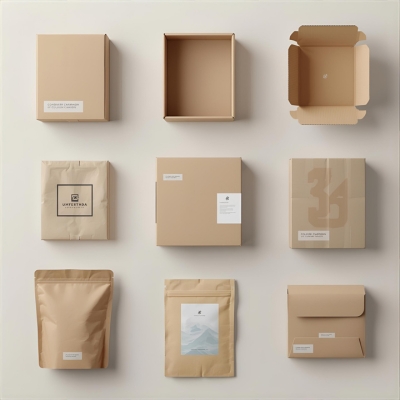
Folding cartons are the go-to for retail, cosmetics, and food brands. They’re lightweight, customizable, and perfect for mass production.
Pros: Compact, printable, cost-efficient.
Cons: Less protective for fragile products.
Rapidly rising across food and personal care categories. Flexible packaging minimizes shipping weight and waste.
Pros: Space-saving, low emissions.
Cons: Limited structure and premium perception.
Kraft boxes stand for sustainability and simplicity. Made from recycled fibers, they’re easy to dispose of and communicate an eco-conscious brand image.
Pros: 100% recyclable, sturdy, natural look.
Cons: Limited glossy finish or vibrant color printing.
Window packaging lets consumers “see before buying.” Popular in retail food, toys, and cosmetics.
Pros: Visual impact, transparency, customer trust.
Cons: May include non-recyclable film unless mono-material is used.
A premium favorite in luxury gift packaging and electronics. The magnetic flap adds a refined unboxing feel.
Pros: Elegant, reusable, customizable.
Cons: Higher cost and weight.
Practical and premium; suitable for gifts, jewelry, and collectibles.
Pros: Unique opening, reusable, strong.
Cons: Slightly higher assembly cost.
Ideal for wines, candles, and cosmetics, tube boxes protect round items while offering modern aesthetics.
Pros: Distinct shape, brand differentiation.
Cons: Less space-efficient for rectangular products.
Mailer boxes combine shipping efficiency with branding potential — widely used by subscription services and DTC brands.
Pros: Self-locking, easy to assemble, printable inside/outside.
Cons: Not suitable for very heavy items.
| Box Type | Advantages | Limitations |
|---|---|---|
| Corrugated Box | Strong, low-cost, recyclable | Bulky for retail display |
| Rigid Box | Premium feel, reusable | Expensive, heavier |
| Flexible Pouch | Lightweight, sustainable | Low structure support |
✅ Recommendation: For DTC brands, combine flexible pouches for product with a corrugated mailer for shipping — balancing sustainability, protection, and branding.
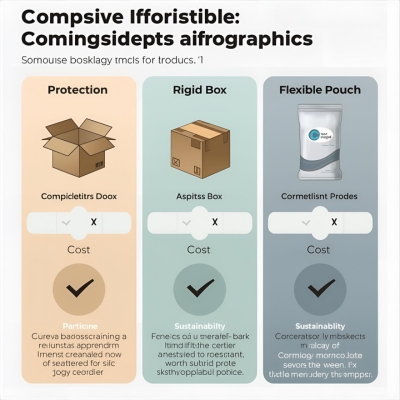
Start by assessing product fragility and transport distance.
Heavy electronics → Corrugated or Rigid boxes with inserts.
Cosmetics or food → Folding cartons or pouches.
Select mono-material packaging that’s locally recyclable. Sustainable Packaging Coalition emphasizes that simpler structures improve recycling rates and lower costs.
Add branding through custom packaging boxes, textures, or magnetic closures while keeping materials eco-friendly. A better unboxing moment increases repeat purchases.
Keep dimensions tight to minimize wasted space and shipping cost.
Print sustainability messages clearly (e.g., “100% recyclable”).
Test “drop and compression” to ensure safety before mass production.
Partner with a reliable packaging box factory in China that offers design-to-delivery service to reduce lead time.
1. Which packaging box is best for online shipping?
Corrugated and mailer boxes are best for e-commerce due to their protective structure and flat-packing efficiency.
2. What is the most eco-friendly packaging material in 2025?
Kraft paper and mono-material pouches rank highest in recyclability and sustainability.
3. Are rigid boxes recyclable?
Yes, most rigid boxes are recyclable if made from paperboard and free of laminated coatings.
4. How do I make my packaging more sustainable?
Use recyclable materials, reduce unnecessary inserts, and print clear disposal instructions.
5. Where can I order custom packaging boxes in bulk?