Contact Us

Contact Us

Guangzhou Huaisheng Packaging Co.,Ltd.
We provide customers with quality products and provide high-quality services.
If you would like to leave us a comment please go to contact us
+86-18122240089


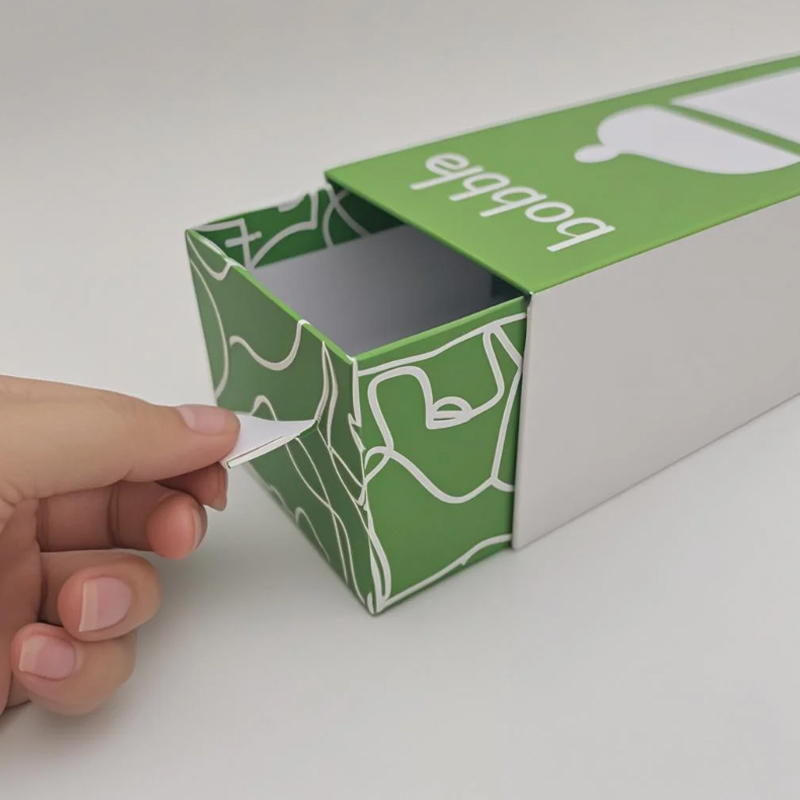
A sliding drawer box has a satisfying reveal: the tray glides out of a sleeve, often with a ribbon pull or finger notch. It suits jewelry, stationery, cosmetics, chocolates, and corporate sets because it feels precise and keeps the product protected. The experience depends on one thing, the fit between tray and sleeve, which is easy to get wrong.
This article is written for brands choosing between drawer, lid-and-base, and magnetic formats, and for buyers who want to understand what to specify when ordering drawer boxes.
The central problem is tolerance. If the tray is too tight, it binds and tears the sleeve; too loose, and it slides out unexpectedly or rattles. Paper wrap thickness, board swelling in humid conditions, and hand assembly all affect fit, so a sample that works in the office may feel different after shipping.
Another problem is finish durability. Matte soft-touch wraps look elegant but can scuff at the sleeve edges where the tray slides. Buyers also forget to specify the pull mechanism, which changes both the experience and the structure, since a ribbon needs an anchor and a finger notch needs reinforcement.
The target buyer includes jewelry and watch brands, stationery and corporate gift suppliers, chocolatiers, cosmetics brands, and e-commerce brands wanting an unboxing moment. A jewelry brand wants a plush insert and fine finish, while a corporate buyer wants a consistent, cost-efficient set.
Because drawer boxes open along one axis, they also suit products that benefit from a presentation tray, such as a row of pens or a set of small bottles.
Before sampling, confirm outer and inner dimensions, board thickness for tray and sleeve, wrap paper and finish, pull type (ribbon, finger notch, or tab), insert type, and whether the sleeve is open on both ends or has a stop. State how many times the box is expected to open.
A complete RFQ should include the product and insert details, quantity, finishing, and delivery date. Ask the factory about its tolerance control and request a sample, then test sliding after leaving it in a cool, dry, and slightly humid room to see how the fit changes.
Allow a small, consistent gap between tray and sleeve, and plan the paper wrap thickness into the dimensions. A paper-wrapped sleeve with a slightly textured finish hides marks better than a glossy one. For heavy products, reinforce the tray and consider a stop so the drawer cannot slide fully out.
Ribbon pulls look elegant but must be anchored securely. A finger notch is simpler and more robust, but it should be placed so that it does not weaken the sleeve edge. Test both with repeated openings before committing.
The following internal links can be used inside the article body or at the end of the article to guide visitors toward relevant product pages:
Compare drawer, lid-and-base, and magnetic formats using the real product. Drawer boxes tend to suit slim or flat products and shine when the reveal is part of the story, while lid-and-base and magnetic boxes suit deeper products and heavy items.
Huaisheng produces drawer, rigid, and magnetic boxes in-house and tests fit during sampling. Share your product and quantity and we will recommend a format and tolerance.
Usually the tray and sleeve tolerance is too tight, or the board has swelled with humidity; adjusting the gap and wrap thickness resolves it.
A finger notch is simpler and sturdier, while a ribbon is more elegant but needs a secure anchor.
Yes, with a reinforced tray and a stop, though very heavy items may be better in lid-and-base or magnetic boxes.
Sliding drawer boxes depend on precise fit and a sensible pull mechanism. Buyers who test tolerance under real conditions and match the format to the product get a smooth, durable reveal. The next step is to share your product and quantity for a drawer box recommendation.