Contact Us

Contact Us

Guangzhou Huaisheng Packaging Co.,Ltd.
We provide customers with quality products and provide high-quality services.
If you would like to leave us a comment please go to contact us
+86-18122240089

PR kits and subscription boxes are built for repetition. The same structure goes out every month or every launch, while the contents and artwork change. Packaging procurement therefore focuses on a flexible, repeatable structure, with enough room to swap inserts and artwork without new tooling.
This article is written for brands that send influencer and press kits, subscription box companies, and marketing teams that run recurring unboxing programs.
The main problem is designing a box around one month's contents. When next month's items have different sizes, the insert no longer fits and the team rebuilds from scratch. A second problem is over-investing in a one-off structure that cannot be reused, while a third is under-investing in strength, so boxes arrive crushed.
Costs can also creep. Each new artwork version triggers new plates and proofs, and a box that ships assembled costs more to freight than one that ships flat. Teams that plan these factors early keep the program profitable.
The target buyer includes beauty, food, fashion, and lifestyle brands, subscription companies, and agencies running PR campaigns. A PR kit prioritizes impact and shareability, while a subscription box prioritizes cost per shipment and repeatability.
Both groups benefit from a base structure with a modular insert, so the box stays the same and the interior adapts.
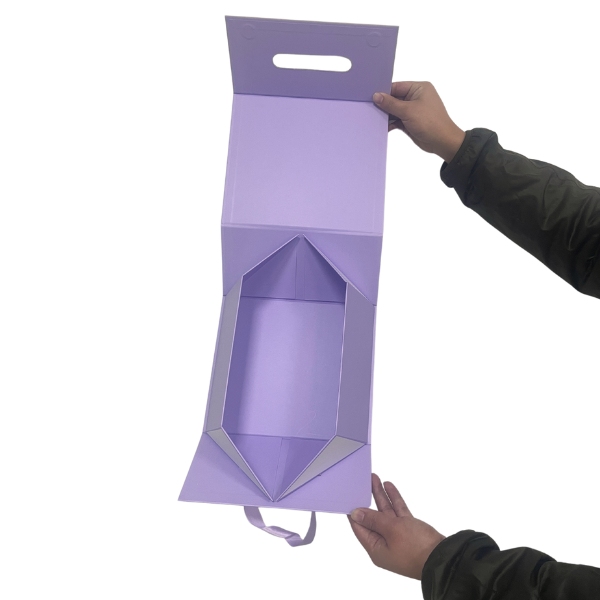
Before sampling, confirm outer dimensions with room for the largest expected content, structure (folding mailer, magnetic folding box, or corrugated gift box), board, print method, closure, and insert system. Decide whether the artwork will change per cycle and how many versions are planned.
A complete RFQ should include forecast quantities per cycle, number of artwork versions, flat or assembled shipping, destination, and the date needed. Ask about plate and proof costs for each version and whether short runs are available for limited editions.
A neutral base, such as a solid color box with a changeable sleeve or insert card, lets you update the look without changing the structure. Paper-based, modular inserts adapt to different products, and a printed card or tissue adds the seasonal touch at low cost.
Make assembly simple. A box that folds in seconds saves labor at scale, and a closure that holds without extra tape keeps the unboxing clean. Test the box with real mailing conditions, including a drop and compression.
The following internal links can be used inside the article body or at the end of the article to guide visitors toward relevant product pages:
Start with a base structure and plan three seasons of content before approving it. Request a sample, fill it with a mock month of contents, and ship it to yourself to see how it looks on arrival.
Huaisheng produces folding and magnetic folding boxes and corrugated mailers, and can advise on modular inserts and artwork changes. Share your planned cycles and quantities and we will propose a repeatable structure.
Yes, if the dimensions allow for the largest contents and the interior uses a modular insert.
Use a neutral base with sleeves or cards, or plan limited runs that share the same structure.
Often yes, since flat shipping reduces freight volume, provided that assembly is quick.
PR kit and subscription packaging succeeds when the structure is repeatable and the interior flexible. Buyers who plan several cycles ahead save tooling cost and keep the unboxing consistent. The next step is to share your planned cycles and quantities for a base structure proposal.