Contact Us

Contact Us

Guangzhou Huaisheng Packaging Co.,Ltd.
We provide customers with quality products and provide high-quality services.
If you would like to leave us a comment please go to contact us
+86-18122240089

A perfume packaging box that wins on the retail shelf delivers three things at once — memorable visual impact, tactile luxury, and clear product storytelling — while remaining true to sustainability expectations. Brands that optimize materials, finish, and shelf geometry can increase attention, conversion and social sharing without breaking the bank.
Fragrance is a high-touch, high-consideration purchase where packaging heavily influences perception and discovery. Online and in-store trends both show packaging increasingly drives consumer interest: fragrance e-commerce continues to expand (statista reports rising online fragrance revenues and that online will represent a growing share of fragrance sales). Meanwhile packaging trade coverage shows premium finishes, sustainability and interactive elements are top design investments for 2024–25.
Key point: today’s perfume shopper expects packaging that signals value, tells a story, and — increasingly — demonstrates environmental responsibility. Brands that balance these elements get better shelf attention, more unboxing shares, and higher perceived quality.
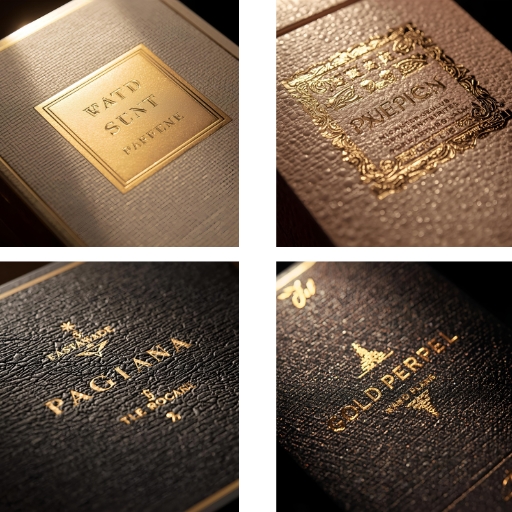
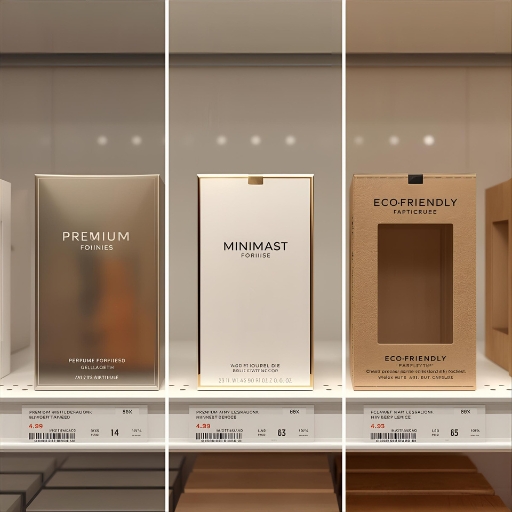
When planning perfume packaging box branding, most brands pick one dominant strategy or combine elements of several. Below are three common strategies, their advantages and tradeoffs, and a quick “shelf-impact” ranking
| Strategy | Pros | Cons | Best for | Shelf Rank |
|---|---|---|---|---|
| Premium finish (rigid box + foil/emboss) | Strong tactile luxury; instant visual signal; great for gifting | Higher cost and heavier CBM (shipping) | Luxury fragrances, limited editions | ★★★★★ |
| Minimalist premium (clean artboard, soft-touch lamination) | Modern luxury look; lower cost than rigid; great photography | Needs strong brand language to stand out | Niche & designer perfumes | ★★★★☆ |
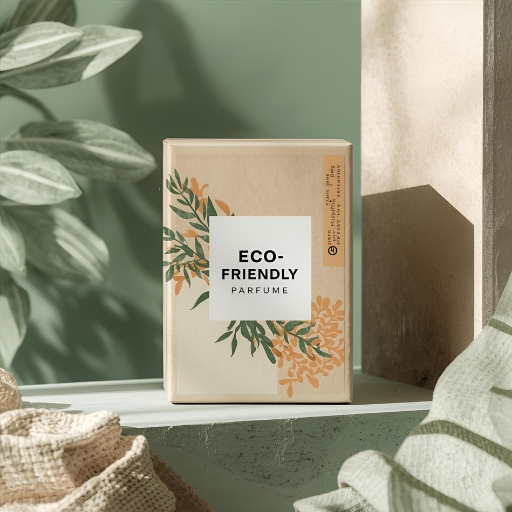
| Eco-visible & interactive (recyclable board, cut-outs, QR/AR) | Speaks to sustainability-conscious buyers; drives digital engagement | Less immediate 'glamour' if not well executed | Mass-market premium & Gen-Z focused lines | ★★★★ |
Decision tip: If retail shelf is the absolute priority, prioritize tactile finishes (foil/emboss) on a compact silhouette. If you sell mostly online, prioritize photogenic minimalism + interactive elements (QR/AR) to drive conversion and social lift.
Is the box displayed in a crowded perfumery counter, an airport duty-free shelf, or a boutique? Each situation changes scale, lighting, and competitor set — and should dictate size, silhouette and finish.
Rigid (setup) boxes = premium unboxing; best for high-end gifts.
Folding cartons (paperboard) = great print area, lighter.
Corrugated mailers = shipping-first (use with inner premium sleeves).
Pick structure based on where the product will be seen and handled.
Select board grades (GSM/flute), request FSC or recycled content certificates, and avoid mixed plastic laminates if recyclability is a claim you plan to make — consumers and regulators watch this closely. Industry trend reports show “eco-visibility” on packaging is rising in influence.
Design for glance value: logo + silhouette + metallic highlight. Use foil stamping, embossing, spot UV or soft-touch strategically — not everywhere. A small foil logo or textured band often outperforms full-coverage foil for ROI.
Test finishes in-hand: soft-touch, linen emboss, or subtle debossing change the emotional valence. Perfume buyers often judge a bottle by a quick feel — the box should feel like the bottle it contains.
Mock up product on a sample shelf with competitor SKUs under retail lighting. Also photograph for e-commerce thumbnail and social feed — packaging that photographs well extends shelf appeal into search and ads.
Confirm MOQ, tooling cost, lead times, CBM and palletization with your gift box factory / packaging supplier. Optimize box geometry to reduce wasted shelf footprint and shipping CBM.
Foil stamping: instant luxury signal; high visual pull in bright retail lighting.
Emboss/deboss: tactile memory — customers remember touch.
Soft-touch lamination: modern premium feel, anti-fingerprint.
Spot UV: creates contrast in printed areas (logo, pattern).
Use a combination: e.g., spot UV over a matte soft-touch panel with a small foil logo.
Packaging trade analyses recommend “less is more” — selective applications of expensive finishes deliver better ROI than full-coverage treatments.
Before mass roll-out, set success metrics:
Shelf attention lift (A/B display tests),
Conversion lift (store or landing page),
Social shares / unboxing mentions,
Damage/return rate (logistics QA),
Recyclability verification (certificates).
Measure with small regional pilots before full distribution.
Q1: Do premium finishes always increase sales?
A1: Not always — they increase perceived value and impulse appeal, but ROI depends on price positioning and target customer. Test on hero SKUs first.
Q2: Are foil and embossing recyclable?
A2: Foil and mixed laminates can complicate recycling; if recyclability is required, opt for mono-material or separable foil applications and document with supplier certification.
Q3: How important is box silhouette vs. graphic design?
A3: Both matter — silhouette grabs attention at a distance; graphics and finish seal perceived quality up close. Prioritize silhouette in crowded shelf environments.
Q4: Can sustainable packaging look premium?
A4: Yes — many brands now use uncoated textured boards, tasteful spot finishes, and innovative structures to convey luxury while staying recyclable.
Q5: What should I ask my perfume packaging supplier?
A5: Request prototypes, FSC/recycled content certificates, finish sample cards, MOQ & tooling breakdown, pre-shipment QC photos and transit test reports.