Contact Us

Contact Us

Guangzhou Huaisheng Packaging Co.,Ltd.
We provide customers with quality products and provide high-quality services.
If you would like to leave us a comment please go to contact us
+86-18122240089

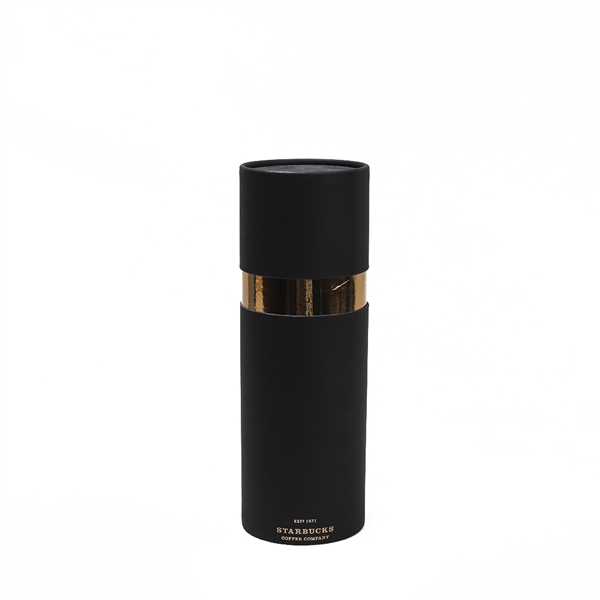
Round packaging stands out on a shelf of rectangles. Paper tubes and cylinder boxes suit bottles, candles, cosmetics, tea, flowers, and many accessories, and the shape often becomes part of the brand. The structure, however, differs from a rectangular box: the walls are wound or wrapped, the lid must seat on a curve, and printing wraps around a surface that is never flat.
This article is written for brands that want round packaging and need to understand the options, trade-offs, and specifications before requesting quotes.
A common problem is assuming that a tube costs the same as a box of equal volume. Round packaging often needs different tooling, more manual steps, and wasted board around the curve, so cost can be higher or lower depending on size and volume. Another problem is seam visibility: a spiral or butt seam can look unfinished if not planned.
Buyers also discover that tubes do not stack or ship as efficiently as flat-packed boxes. Round shapes leave air in a carton, and an unprotected tube can dent under a drop. A final problem is lid fit: too loose and it falls off, too tight and it tears the paper.
The target buyer includes wine and spirits brands, candle and fragrance makers, cosmetics and skincare brands, tea and food producers, and gifting companies. Each uses tubes differently: a bottle brand needs height and a secure base, a cosmetics brand needs a refined finish, and a food brand needs suitable materials.
Brands launching a product line often prefer a family of tubes sharing the same diameter and lid, which reduces tooling and makes the range look coherent.
Before sampling, confirm inner diameter and height, wall thickness and board type, lid style (push-fit, shoulder, or separate lid and base), base construction, wrap material, and finishing. Provide the product dimensions, including any cap or label that adds width.
A complete RFQ should include insert needs, such as a paper holder for a bottle, quantity per size, printing details, carton packing, and shipping method. Ask the factory how the seam will be treated, and request a sample to check roundness, lid fit, and print alignment across the seam.
Artwork on a curve needs to account for the seam and for the way text wraps. Keep key logos away from the seam, and test that patterns align where the wrap meets. Foil and embossing work well on tubes but should be placed away from the lid edge, where wear is highest.
Consider reinforcing the base and adding an insert so the product does not rattle. For heavy bottles, a thicker wall or a rigid base is worth the added cost. If the tube will be reused, choose a lid that can open many times without damaging the rim.
The following internal links can be used inside the article body or at the end of the article to guide visitors toward relevant product pages:
Compare round and rectangular options for the same product on three points: unit cost at your volume, freight volume per carton, and how each looks on shelf. A short sample run with the real product is often the quickest way to settle the decision.
Huaisheng produces paper tubes and cylinder boxes with custom inserts, foil, and embossing. Share your product dimensions and quantity and we will propose a size, lid, and finish.
It depends on size and volume; round packaging can need different tooling and manual steps, so compare quotes for the same product.
Specify a tight tolerance and test a sample for fit over repeated openings, adjusting the lid height or liner if needed.
No, tubes ship as formed cylinders, so freight volume per carton is usually higher than for flat-packed boxes.
Paper tube and cylinder boxes reward buyers who plan the seam, lid, and base with the product in hand. Comparing round and rectangular options on cost, freight, and shelf impact leads to a better decision than choosing on appearance alone. The next step is to share your product dimensions and volume for a tube specification.