Contact Us

Contact Us

Guangzhou Huaisheng Packaging Co.,Ltd.
We provide customers with quality products and provide high-quality services.
If you would like to leave us a comment please go to contact us
+86-18122240089


Retailers and brands increasingly ask suppliers to prove how workers are treated and how the factory manages safety and the environment. A social compliance audit is the standard way to show this. For packaging buyers, the audit report is both a risk tool and a sales asset when retail partners ask about the supply chain.
This article is written for brands, importers, and sourcing teams who need to evaluate or document the social compliance of packaging suppliers.
The first problem is treating the audit as a logo. A certificate or score without the underlying report says little about actual conditions. The second problem is outdated audits: a report from several years ago may not reflect current practices, so validity dates matter.
Buyers also confuse different standards. WCA, BSCI, Sedex, and others have different scopes and report formats, and a retailer may accept only certain ones. Finally, a good score does not remove the need for follow-up on corrective actions.
The target buyer includes brands selling to large retailers, importers with compliance policies, ESG and procurement teams, and agencies that must document their supply chain. Each should ask which standard is required and whether the supplier's report is current.
Smaller buyers who do not require a formal audit may still request a recent report to understand labor practices, fire safety, and environmental management.
Before ordering, ask for the latest audit report, the audit standard and date, the overall score or rating, the list of findings and corrective actions, and the validity period. Check that the audited site is the one that will produce your order.
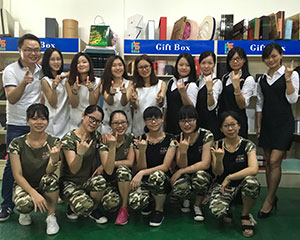
A complete request should also cover other certifications relevant to the product, such as material and product tests. Huaisheng has completed a WCA assessment covering labor practices, wages and working hours, occupational health and safety, management systems, and environmental management, and reports an overall performance score of 92%, with full scores in Labor and Environment.
Compliance affects sourcing design as well. A supplier with strong management systems is more likely to deliver on time and to handle documentation for export. Ask how the factory trains workers, tracks hours, and handles overtime, because these affect delivery risk during peak season.
Treat audits as a process. Ask how often the supplier is audited, who follows up on findings, and how corrective actions are documented. A supplier that welcomes questions is usually a more reliable partner.
The following internal links can be used inside the article body or at the end of the article to guide visitors toward relevant product pages:
Request the report, not just the certificate. Read the findings, check the date, and confirm the scope. If your customer requires a particular standard, confirm it before placing an order, not after production.
Share your retailer's requirements with us and we will provide the available audit documents and certifications for review.
A Workplace Conditions Assessment evaluates a facility's labor practices, working hours, health and safety, management systems, and environmental practices.
No, buyers should read the report, check the date and scope, and review corrective actions.
Not always, but requesting a recent report is a low-cost way to understand supplier practices.
Social compliance documentation helps buyers manage risk and answer retail partners. Buyers who request current, scoped reports and follow up on findings build stronger supply chains. The next step is to share your retailer's requirements so the right documents can be provided.