Contact Us

Contact Us

Guangzhou Huaisheng Packaging Co.,Ltd.
We provide customers with quality products and provide high-quality services.
If you would like to leave us a comment please go to contact us
+86-18122240089

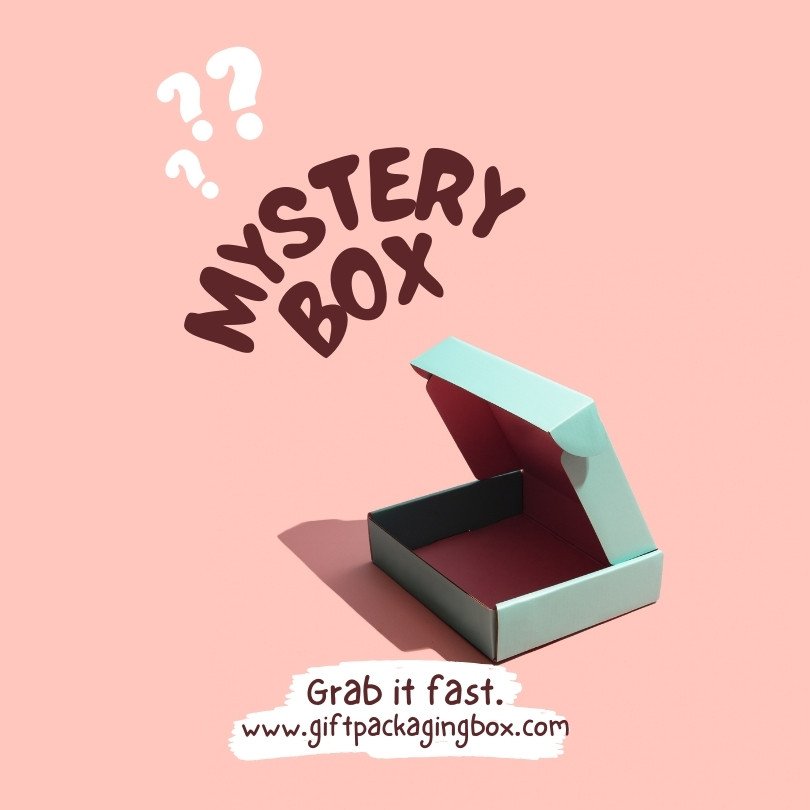
Mystery and blind box packaging has a requirement most other gift categories do not share: the box must keep its contents genuinely hidden until opened, since the surprise itself is part of the product's value. This drives specific decisions around opacity, tamper-evidence, and weight-masking that a standard visible-product box never has to consider, and it has become a significant packaging category as collectible and blind-box retail has grown.
This article is written for collectible toy and figure brands, beauty and lifestyle brands running blind-box promotions, and subscription or gifting companies using a surprise-reveal format to drive engagement.
The first problem is underestimating how product weight or shape can betray the contents through the box even when the exterior is opaque, which undermines the blind-box concept if the same box shape is used for visibly different items. The second problem is not confirming tamper-evidence requirements, which matter for collectible and resale-driven categories where customers want assurance a box has not been opened and reclosed.
Buyers also frequently discover that a mystery box program often requires several structurally similar but visually distinct box variants (to prevent guessing contents from box design), which adds tooling and inventory complexity beyond a single-SKU packaging order.
The target buyer includes collectible toy and figure brands, beauty or lifestyle brands running limited blind-box drops, and subscription or gifting companies using surprise packaging to drive repeat purchases. Each should weigh how strictly the box needs to disguise contents, since this affects both structural design and cost.
Because blind-box buyers often collect multiple units to complete a set, consistent quality and structural integrity across every unit in a large production run matters more in this category than in a single-purchase gifting product.
Before sampling, buyers should confirm box opacity and any weight-masking requirements (uniform box weight regardless of contents, using filler if needed), tamper-evident sealing method, and whether multiple visually distinct box variants are needed to prevent contents from being guessed. These parameters shape both structure and production planning.
A complete RFQ should include the full range of possible contents (including weight and size variation across the set), order quantity, and whether tamper-evident sealing is required for resale or collectible assurance. Buyers should ask the factory whether uniform-weight packing is achievable across a varied product range.
Structural consistency across a production run matters more in this category than most, since collectors handling multiple units will notice quality variation between boxes more readily than a one-time gift buyer would. A tamper-evident seal — a sticker, a perforated flap, or a shrink band — should be tested for both security and ease of legitimate opening.
If weight-masking is required, buyers should work with the factory on a filler or counterweight strategy that keeps box weight consistent across different possible contents, which is a detail easy to overlook until customers start comparing box weights to guess what is inside.
The following internal links can be used inside the article body or at the end of the article to guide visitors toward relevant product pages:
Buyers should clarify from the outset how strictly the box needs to hide contents — through opacity alone, or also through weight and shape masking — since this materially affects structural design and cost. Testing tamper-evident seals for both security and legitimate ease of opening prevents customer frustration without compromising the surprise-reveal concept.
Huaisheng can produce multiple structurally consistent box variants for blind-box programs, with tamper-evident sealing options suited to collectible and resale-sensitive categories. We recommend confirming the full range of possible contents early so packing consistency can be planned from the start.
Through a filler or counterweight strategy planned around the full range of possible contents, keeping overall box weight consistent regardless of what is inside.
They are recommended for collectible or resale-driven categories, where customers want assurance a box has not been previously opened.
Visually distinct but structurally identical variants prevent customers from guessing contents based on box design alone.
Mystery and blind box packaging succeeds when opacity, weight consistency, and tamper-evidence are treated as core structural requirements rather than afterthoughts, since the surprise itself is part of what customers are paying for. Buyers who plan for the full range of possible contents and confirm consistency across a large production run avoid the most common failures in this category. The recommended next step is sharing your product range and reveal requirements for a structure and sealing recommendation.