Contact Us

Contact Us

Guangzhou Huaisheng Packaging Co.,Ltd.
We provide customers with quality products and provide high-quality services.
If you would like to leave us a comment please go to contact us
+86-18122240089


When ordering custom packaging boxes or shipping cartons, one of the most common challenges for businesses is figuring out the correct box dimensions. Measuring a box properly ensures the right fit for your product, saves shipping costs, and avoids packaging waste. In this guide, we’ll break down how to measure a box dimension step by step, why it matters in packaging, and what to keep in mind when working with manufacturers.
Getting box dimensions right is essential for both e-commerce businesses and traditional retail. An incorrect size could mean:
Higher shipping costs
Product damage during transport
Poor unboxing experience
Inconsistent branding with packaging design
Whether you’re working with custom packaging manufacturers or purchasing stock cartons, accurate measurement is the first step in successful packaging.
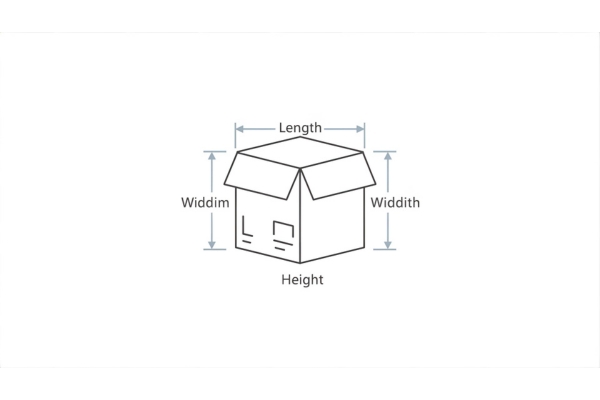
Before learning how to measure a box dimension, it’s important to understand what the three key measurements mean:
Length (L): The longest side of the box, usually measured left to right.
Width (W): The shorter side, measured front to back.
Height (H): The distance from the base to the top, measured vertically.
👉 A common way to express dimensions is L × W × H.
For example, a custom mailer box that is 12 × 8 × 4 inches means it is 12 inches long, 8 inches wide, and 4 inches high.
Always measure inside the box first. This determines how much product can fit inside and is critical for product packaging design.
Use a tape measure or ruler.
Record length, width, and height in inches or centimeters.
Round to the nearest 1/16 inch for accuracy.
📌 Tip: Internal measurements are what most packaging suppliers use when quoting.
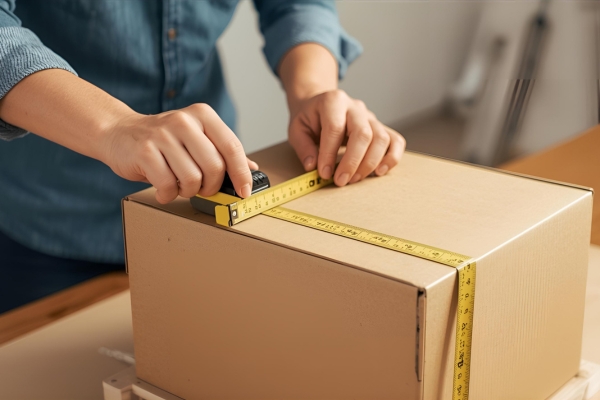
Exterior dimensions matter for shipping and storage.
Place the box on a flat surface.
Measure the outside length, width, and height.
Consider the box’s thickness (corrugated board or rigid paperboard adds to the size).
This helps calculate shipping volume and costs, especially when carriers use dimensional weight pricing.
Different box structures can affect dimensions.
Mailer boxes: Lid height must be included.
Rigid boxes: Often thicker, so exterior and interior sizes differ more.
Folding cartons: Require flat size calculation for printing.
If you are designing a custom gift box with inserts, also measure the space for dividers and compartments.
When you order packaging, suppliers always ask for dimensions in L × W × H order. Mixing up width and height can cause production delays.
A quick way to confirm:
Length is the longest opening dimension.
Width is the shorter opening dimension.
Height is from top to bottom.
Measuring from outside only (may misfit products)
Forgetting material thickness
Using an incorrect unit (cm vs inches)
Reversing width and height
Not considering space for protective inserts or cushioning material
Accurate box measurement helps in several areas:
Cost efficiency – Avoids overpaying for oversized packaging and reduces shipping weight.
Professional branding – A snug, well-measured box enhances the unboxing experience.
Sustainability – Less packaging waste supports eco-friendly practices.
Supplier communication – Clear measurements reduce errors in bulk production.
Measuring Tape / Ruler – Standard for small boxes.
Digital Caliper – For precise measurements of smaller packaging.
Box Dimension Scanner – Used by logistics companies for quick bulk measurement.
CAD Software – In packaging design, dimensions are tested digitally before production.
For shipping carriers like UPS, FedEx, and DHL, the dimensional weight (DIM weight) is calculated using box measurements. A larger box can increase shipping cost even if the product is lightweight.
👉 Example formula from FedEx:
DIM weight = (Length × Width × Height) / DIM factor
This shows why measuring boxes correctly is vital for e-commerce sellers.
When sending measurements to your packaging box manufacturer:
Always specify whether dimensions are internal or external.
List them in the correct order: L × W × H.
If special inserts or dividers are required, provide drawings or mockups.
Clear communication ensures the custom packaging box matches your exact requirements.

Knowing how to measure a box dimension is more than a technical detail—it impacts cost, design, and customer experience. Whether you’re ordering custom packaging, designing branded gift boxes, or simply shipping products, taking time to measure correctly saves money and builds trust in your business.