Contact Us

Contact Us

Guangzhou Huaisheng Packaging Co.,Ltd.
We provide customers with quality products and provide high-quality services.
If you would like to leave us a comment please go to contact us
+86-18122240089


Paper folding gift boxes have become a popular packaging choice for brands that want a balance of elegance, practicality, and cost efficiency. From cosmetics and jewelry to holiday gifts and promotional kits, folding paper boxes offer a clean presentation while saving space during storage and shipping.
But for many buyers and brands, one practical question often comes up:
How do you fold a paper folding gift box correctly for packaging—without damaging the structure or affecting product presentation?
This guide explains the folding process step by step, while also sharing professional insights from the packaging industry to help you avoid common mistakes and choose the right folding box design for your products.
A paper folding gift box is a pre-creased paperboard box designed to be shipped flat and assembled when needed. Unlike rigid boxes that arrive fully formed, folding boxes reduce logistics costs while still offering a premium look.
They are commonly made from:
Coated paperboard
Kraft paperboard
Art paper laminated on greyboard
FSC-certified paper materials
When folded correctly, these boxes maintain structure, symmetry, and durability—essential for brand packaging.
Folding a paper gift box is not just about making it stand. The way a box is folded directly affects:
Structural strength (especially at corners)
Product protection
Visual alignment and symmetry
Customer unboxing experience
Inconsistent folding can cause misaligned edges, weakened corners, or a box that looks cheap—no matter how good the material is.
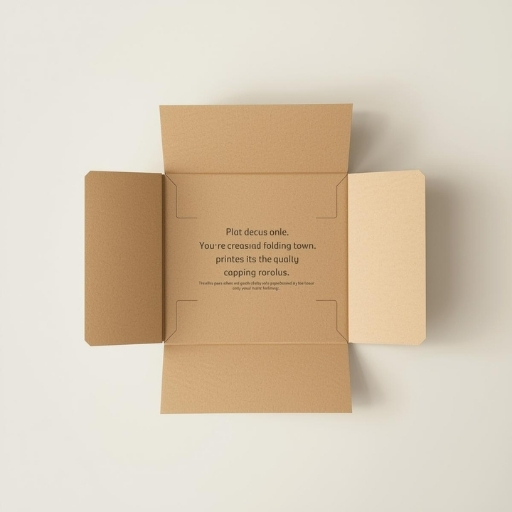
Most paper folding gift boxes are designed for tool-free assembly, but preparing the right environment helps:
Clean, flat working surface
Dry hands (moisture weakens paper fibers)
Soft cloth (for wiping fingerprints on coated surfaces)
Avoid sharp tools unless specified by the manufacturer.
Place the unfolded box flat with the printed side facing down.
Identify all pre-creased lines—these guide the folding process.
Pro tip: Never force a fold in the opposite direction of the crease. This can crack coatings or break paper fibers.
Before forming the box, gently pre-fold each crease by hand.
Why this matters:
Reduces stress on corners
Creates cleaner edges
Makes final assembly smoother
This step is especially important for thick paperboard or laminated surfaces.
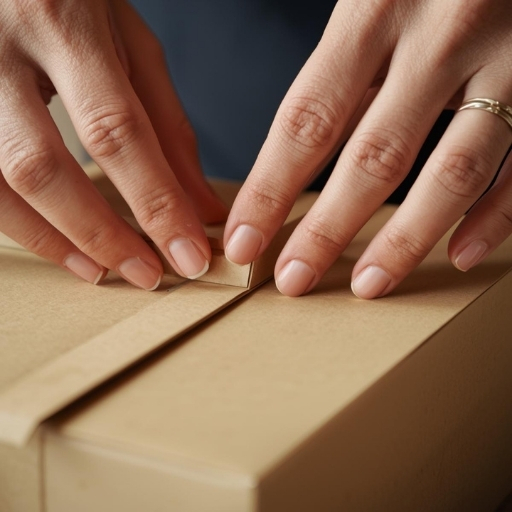
Lift the side panels upward along the crease lines to create the box shape.
Make sure:
Side walls stand at a clean 90-degree angle
Edges align evenly
No warping occurs
If the box has locking tabs or slots, align them carefully but do not force them yet.
Depending on the design, the bottom may use:
Interlocking flaps
Auto-lock (crash bottom) structure
Tuck-in panels
Press gently until all bottom flaps lock into place.
Industry tip: The bottom carries the product weight. If this step feels loose, recheck alignment before proceeding.
Once the structure is formed:
Press each corner from the inside
Smooth outer edges with light pressure
Check for symmetry from all angles
This step ensures the box looks professionally assembled, not handmade.
If your folding gift box includes:
A lid
A magnetic closure
A ribbon or insert
Test the closure gently. The lid should close naturally without resistance or gaps.

This leads to cracked coatings or visible white lines on colored boxes.
Rushing causes misalignment, especially on magnetic or rigid-style folding boxes.
Thicker paperboard requires slower, more deliberate folding.
This is the most common mistake and often results in uneven edges.
While often used interchangeably, there are subtle differences:
Paper folding gift boxes focus on presentation and branding
Folding cardboard boxes prioritize shipping and protection
Gift boxes usually use higher-quality paperboard, refined finishes, and decorative elements.
Folding paper gift boxes are ideal when brands need:
Premium appearance
Lower shipping volume
Easy storage
Fast manual assembly
They are widely used for:
Jewelry and accessories
Cosmetics and perfume
Holiday and Christmas gift sets
Promotional and influencer kits
For brands balancing cost and aesthetics, folding boxes are a smart packaging solution.
Many modern paper folding gift boxes are:
Made with FSC-certified paper
Compatible with eco-friendly coatings
Fully recyclable when free of plastic lamination
Choosing sustainable materials not only supports environmental goals but also strengthens brand credibility.
Q1: Do folding gift boxes require glue?
Most designs do not. They rely on pre-cut locks or magnetic closures.
Q2: Can folding boxes be reused?
Yes. When folded properly, they can be reused multiple times without losing shape.
Q3: Are folding gift boxes strong enough for shipping?
They are suitable for inner packaging but should be placed inside a shipping carton for transit.
Q4: What paper thickness is best for folding gift boxes?
Common thickness ranges from 250gsm to 400gsm paperboard, depending on product weight.
Q5: Can folding boxes look as premium as rigid boxes?
With proper materials and finishes, many folding boxes achieve a comparable luxury appearance.
Knowing how to fold a paper folding gift box correctly is essential—not just for appearance, but for brand perception and product protection. A well-assembled box reflects professionalism, attention to detail, and respect for the customer experience.
For brands seeking elegant, space-efficient, and sustainable packaging, paper folding gift boxes remain one of the most versatile options available.