Contact Us

Contact Us

Guangzhou Huaisheng Packaging Co.,Ltd.
We provide customers with quality products and provide high-quality services.
If you would like to leave us a comment please go to contact us
+86-18122240089


As sustainability becomes a real business requirement rather than a marketing slogan, more brands are switching to biodegradable packaging. Yet one question continues to come up—from procurement teams, brand owners, and even end consumers:
How long does biodegradable packaging actually take to decompose?
The answer is not as simple as a single number. Decomposition time depends on the material, environment, and how the packaging is disposed of. In this guide, we break down the real timelines, common misconceptions, and what brands should know before choosing biodegradable packaging solutions.
Biodegradable packaging refers to materials that can be broken down naturally by microorganisms—such as bacteria and fungi—into water, carbon dioxide, and organic matter under appropriate conditions.
Unlike traditional plastic, biodegradable materials are designed to return to nature without leaving persistent microplastics.
Paper and cardboard packaging
Kraft paper packaging
Molded pulp packaging
Bagasse (sugarcane fiber) packaging
PLA (cornstarch-based bioplastic)
Each of these materials decomposes at a different speed and under different conditions.
Below are realistic decomposition timelines based on industry data and environmental studies.
Paper & Cardboard Packaging
Average decomposition time: 2–6 months
Paper fibers break down quickly when exposed to moisture and oxygen. Uncoated paper decomposes the fastest.
Kraft Paper Packaging
Average decomposition time: 3–6 months
Due to higher fiber density, kraft paper takes slightly longer but remains one of the most eco-friendly options.
Molded Pulp Packaging
Average decomposition time: 3–5 months
Often used for electronics, cosmetics, and protective inserts.
Bagasse Packaging
Average decomposition time: 60–180 days
Bagasse decomposes efficiently and is widely used in food packaging.
PLA Bioplastic Packaging
Average decomposition time: 6 months to 2 years
⚠️ Requires industrial composting conditions—not suitable for landfills or home compost.
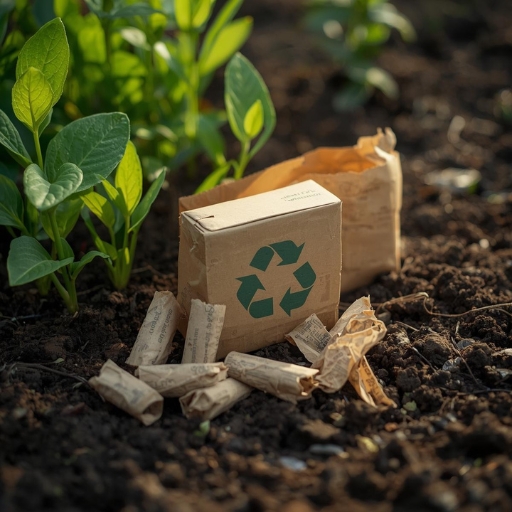
Biodegradation depends heavily on:
Temperature
Moisture
Oxygen availability
Microbial activity
Cold, dry, or oxygen-poor environments (like landfills) significantly slow decomposition.
Industrial composting → fastest and most reliable
Home compost → works for paper and bagasse
Landfill → slowest, sometimes ineffective
Natural soil → variable and unpredictable
This is where many brands make mistakes.
Plastic lamination = blocks decomposition
Water-based inks = compost-friendly
Oil-based or UV inks = slow degradation
Always check the entire packaging structure, not just the base material.
Short answer: No.
| Feature | Biodegradable | Compostable |
|---|---|---|
| Breaks down naturally | Yes | Yes |
| Timeframe defined | ❌ No | ✅ Yes |
| Requires composting facility | Sometimes | Yes |
| Certification required | No | Yes |
For real environmental credibility, look for:
Not automatically.
Reduced long-term pollution
Lower reliance on fossil fuels
Renewable raw materials
Improved brand sustainability perception
In landfills, biodegradable packaging may decompose very slowly
Incorrect disposal can negate benefits
“Biodegradable” claims without certification may lead to greenwashing
Sustainability is not just about materials—it’s about systems.
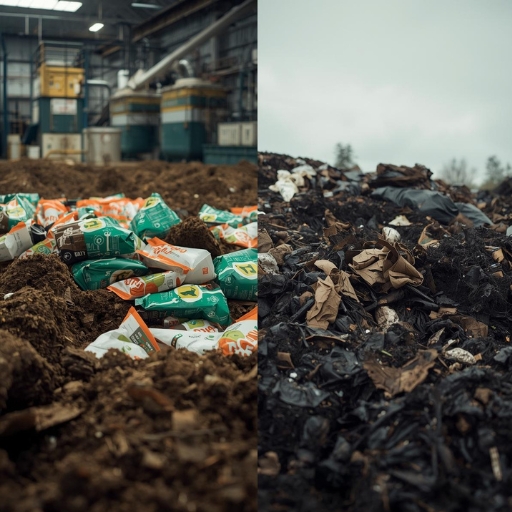
Food packaging → Bagasse, kraft paper
Gift boxes → FSC-certified paperboard
E-commerce shipping → Corrugated kraft boxes
Luxury packaging → Rigid paperboard with eco coatings
Q1: How long does biodegradable packaging take to decompose in a landfill?
A: It can take years, due to lack of oxygen and moisture.
Q2: Can biodegradable packaging decompose at home?
A: Paper, kraft, and bagasse can; PLA usually cannot.
Q3: Does biodegradable packaging break down in water or oceans?
A: No—most require soil microbes, not water.
Q4: Is biodegradable packaging suitable for luxury gift boxes?
A: Yes, when paired with FSC paperboard and eco-friendly coatings.
Q5: How should consumers dispose of biodegradable packaging?
A: Compost where possible, recycle paper-based materials, and avoid landfills.
Biodegradable packaging is a step in the right direction—but only when chosen and handled correctly. Brands that understand materials, disposal environments, and certifications are better positioned to meet sustainability goals without misleading consumers.
True sustainability lies not in labels, but in transparent choices and responsible packaging design.