Contact Us

Contact Us

Guangzhou Huaisheng Packaging Co.,Ltd.
We provide customers with quality products and provide high-quality services.
If you would like to leave us a comment please go to contact us
+86-18122240089


Offset printing, also known as offset lithography, remains the cornerstone of high-quality, large-volume print production in 2025. With the global printing industry projected to exceed $900 billion by year-end, offset printing retains dominance due to its sharp image quality, consistent color, and cost-effectiveness on runs of over 1,000 units.
Before sheets hit the press, artwork undergoes rigorous preflight checks: resolution, color spaces (CMYK or spot), bleed, margins, embedded fonts, trapping, and imposition for pagination and bleed. This stage prevents costly delays downstream.

Modern facilities use computer-to-plate (CTP) systems, laser-etching aluminum plates directly from digital files. Choices include traditional wet plates or waterless (silicon-coated) plates for sharper reproductions and fewer chemicals.
Offset relies on the principle that oil and water don’t mix: dampening rollers apply a fountain solution to non-image areas, repelling oily ink that adheres only to the image zones. Precision ink meters and adjustable screws (or electronic controllers) regulate ink distribution for consistent color density.
Ink transfers from the plate to a rubber blanket cylinder, then to paper via an impression cylinder—this indirect method minimizes plate wear and adapts to textured substrates.
Offset builds full-color images using CMYK process color plates. Halftoning uses microscopic dots to simulate continuous tones; dot screen angles are varied to avoid moiré patterns. For brand-specific color, printers may add Pantone (PMS) spot plates.
Modern presses have automated register control systems that ensure precise alignment across color units. Operators conduct a press check—visually comparing proofs to first sheets, adjusting for color balance, registration, paper quality, and print defects.
Sheet‑Fed Offset: Prints pre-cut sheets, ideal for brochures, business cards, and posters.
Web‑Fed Offset: Prints from continuous rolls—used for newspapers, catalogs, high‑volume jobs. Runs may exceed 18,000 sheets per hour.
UV/LED Offset: Employs UV-cured inks for instant drying—great for specialty substrates and packaging.
Waterless Offset: Eliminates fountain solution, offering sharper color and fewer environmental concerns.
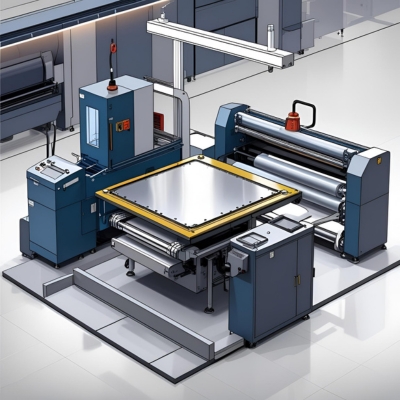
| Feature | Offset Printing |
|---|---|
| Unit Cost | Low per-sheet cost on large runs |
| Image Quality | Sharp text and consistent color |
| Substrates | Works on paper, cardboard, plastics |
| Setup Time | High initial cost and time for plates and calibration |
| Environmental | Plates often aluminum (recyclable); waterless options reduce chemicals; low‑VOC inks available |
The global offset printing market is growing at ~1.3% CAGR, projected to surpass $900B in 2025.
Hybrid presses now integrate digital printing heads for small‑run personalization alongside offset throughput.
Automation—plate loading, press check, color calibration—reduces waste and setup time.
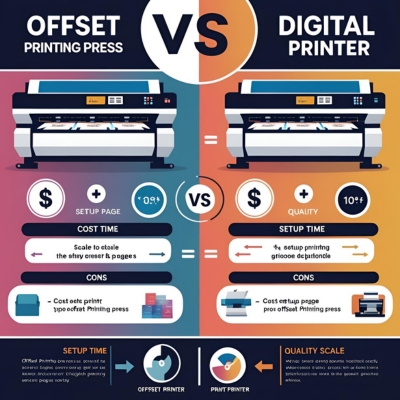
Why are my prints misregistered?
Check plate mounting, pressure roll alignment, and registration marks. Auto-register systems can help.
Why do colors shift in long runs?
Ink density, fountain solution balance, or paper moisture may fluctuate—conduct regular press checks.
Best paper choices?
Coated stock produces sharper prints; uncoated stock offers a tactile feel but may absorb ink differently.
Turnaround trade-offs?
Offset setup takes longer, but for runs over ~1,000 units, it’s often faster overall than digital.
Submit final artwork in CMYK or flattened Pantone, at ≥300 dpi.
Request a hard‑copy proof before plate making if color is critical.
Talk to your print partner about ink recirculation systems to reduce waste.
Use recycled or FSC-certified paper and soy‑based or low‑VOC inks for sustainability.
Negotiate volume discounts once your run hits the cost break-even (~2,000 units or more).
Offset printing remains essential for high-volume, premium-quality print jobs in 2025. Technological enhancements—waterless plates, UV curing, automated color control—have boosted efficiency and eco-friendliness. As hybrid print systems and personalized print-on-demand rise, offset will stay relevant for base runs and high-end collateral.