Contact Us

Contact Us

Guangzhou Huaisheng Packaging Co.,Ltd.
We provide customers with quality products and provide high-quality services.
If you would like to leave us a comment please go to contact us
+86-18122240089

A great Creative Packaging Design doesn’t just protect a product—it can make it go viral. The secret lies in combining personalization, shareable unboxing experiences, and sustainability. These three elements can transform an ordinary custom packaging box into a marketing engine that drives sales, social media engagement, and brand loyalty. When executed well, packaging becomes part of the product story—and part of the consumer’s identity.
1. Packaging directly influences buying decisions.
According to Ipsos, about 72% of consumers say that packaging design impacts their purchase choice (Ipsos, 2023). In other words, packaging aesthetics and storytelling are no longer “nice-to-have”—they’re key sales drivers.
2. Unboxing is now part of digital marketing.
Data from Think with Google reveals that millions of consumers watch unboxing videos before making a purchase decision. The “shareability factor” turns each box into free social media advertising.
3. Sustainability drives modern loyalty.
McKinsey reports that consumers are increasingly preferring eco-friendly and recyclable packaging options, viewing them as a reflection of corporate responsibility. Sustainable design not only helps the planet—it boosts brand trust and long-term engagement.
Strategy: Turned bottles into emotional connectors by printing popular names and nicknames.
Result: Huge social media sharing wave, massive engagement, and significant sales growth.
Takeaway: Personalization builds emotional bonds but requires precise production and SKU management.
Strategy: Apple treats its packaging as part of the product. Each box opens with controlled resistance and reveals each component in order—turning unboxing into a ritual.
Result: “Apple unboxing” videos generate millions of views globally.
Takeaway: A clean, tactile design can amplify perceived product quality—but demands meticulous material and structure precision.
Strategy: Leveraged minimalist pink pouches and simple labels to build strong brand recognition.
Result: Every package became a shareable moment, fueling a loyal online community.
Takeaway: Packaging should align with brand voice and community culture—it’s not just a container but a social symbol.
Strategy: Transitioned from plastic to paper fiber packaging to reduce carbon footprint.
Result: Lower logistics costs, improved recyclability, and positive media attention.
Takeaway: Sustainable packaging is both an operational efficiency and a communication asset.
Strategy: Simplified packaging for easier opening, shipping efficiency, and waste reduction.
Result: Reduced customer complaints and shipping costs while enhancing eco-credentials.
Takeaway: In e-commerce, convenience and sustainability define the packaging experience.
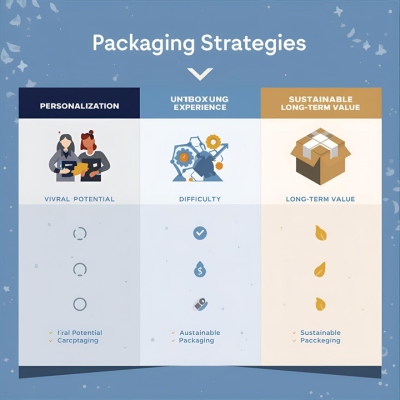
| Strategy Type | Example Brands | Viral Potential | Implementation Difficulty | Long-Term Value | Key Weakness |
|---|---|---|---|---|---|
| Personalization & Limited Editions | Coca-Cola | ⭐⭐⭐⭐⭐ | ⭐⭐⭐ | ⭐⭐⭐⭐ | Complex SKU & print management |
| Unboxing Experience / Visual Storytelling | Apple, Glossier | ⭐⭐⭐⭐ | ⭐⭐⭐⭐ | ⭐⭐⭐⭐⭐ | High production cost |
| Sustainability & E-Commerce Optimization | IKEA, Amazon | ⭐⭐⭐ | ⭐⭐ | ⭐⭐⭐⭐⭐ | Long transformation timeline |
Recommendation:
For fast viral reach, blend Personalization + Unboxing Experience.
For long-term brand reputation, invest in Sustainable Packaging and supply chain integration.
Clarify who you want to impress and what story your packaging should tell. Is it emotional connection, eco-responsibility, or luxury simplicity?
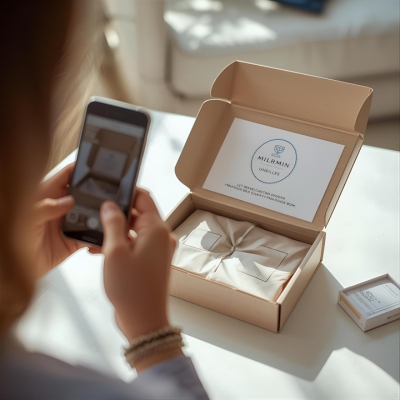
Identify what the consumer will do the moment they receive the product—take a photo, record a video, or share it online. These “share triggers” make your packaging inherently viral.
Balance creativity with feasibility. Use recyclable paperboard, soy inks, or FSC-certified materials to enhance brand perception and meet sustainability expectations.
Run small focus groups or video tests. Track time to open, ease of reuse, and aesthetic satisfaction. Use these metrics to refine the structure.
Collaborate with your packaging supplier to ensure that customization doesn’t inflate cost beyond ROI. A trusted custom packaging box manufacturer can help balance quality and scalability.
Monitor social engagement (#unboxing hashtags, user mentions), conversion rates, and return data. Use analytics to continuously optimize design and messaging.
Viral packaging doesn’t happen by chance—it’s the result of data-driven creativity. The world’s most successful Brand Packaging Examples combine emotional storytelling, design functionality, and sustainability. By following these case studies and applying structured creativity, brands can turn every box into a miniature advertisement that multiplies customer love and long-term loyalty.
Q1. Does packaging really affect sales?
Yes. Around 72% of shoppers say packaging design influences their decision (Ipsos, 2023). A well-designed box can directly boost conversion rates.
Q2. How can I measure a packaging design’s viral impact?
Track user-generated content (UGC), video views, social shares, and sales uplift during campaigns. Tools like Google Analytics and social listening platforms can quantify these effects.
Q3. Is personalized packaging too expensive?
It can increase printing and management costs, but when executed strategically—like Coca-Cola’s “Share a Coke”—ROI often outweighs the expense.
Q4. Can sustainable packaging still look premium?
Absolutely. Brands like IKEA and Apple show that eco-friendly design and luxury aesthetics can coexist when material choice and finishing are well-balanced.
Q5. How can I make my custom packaging box social-media-friendly?
Incorporate interactive elements like QR codes, short messages, or limited-edition inserts that encourage sharing and tagging your brand online.