Contact Us

Contact Us

Guangzhou Huaisheng Packaging Co.,Ltd.
We provide customers with quality products and provide high-quality services.
If you would like to leave us a comment please go to contact us
+86-18122240089

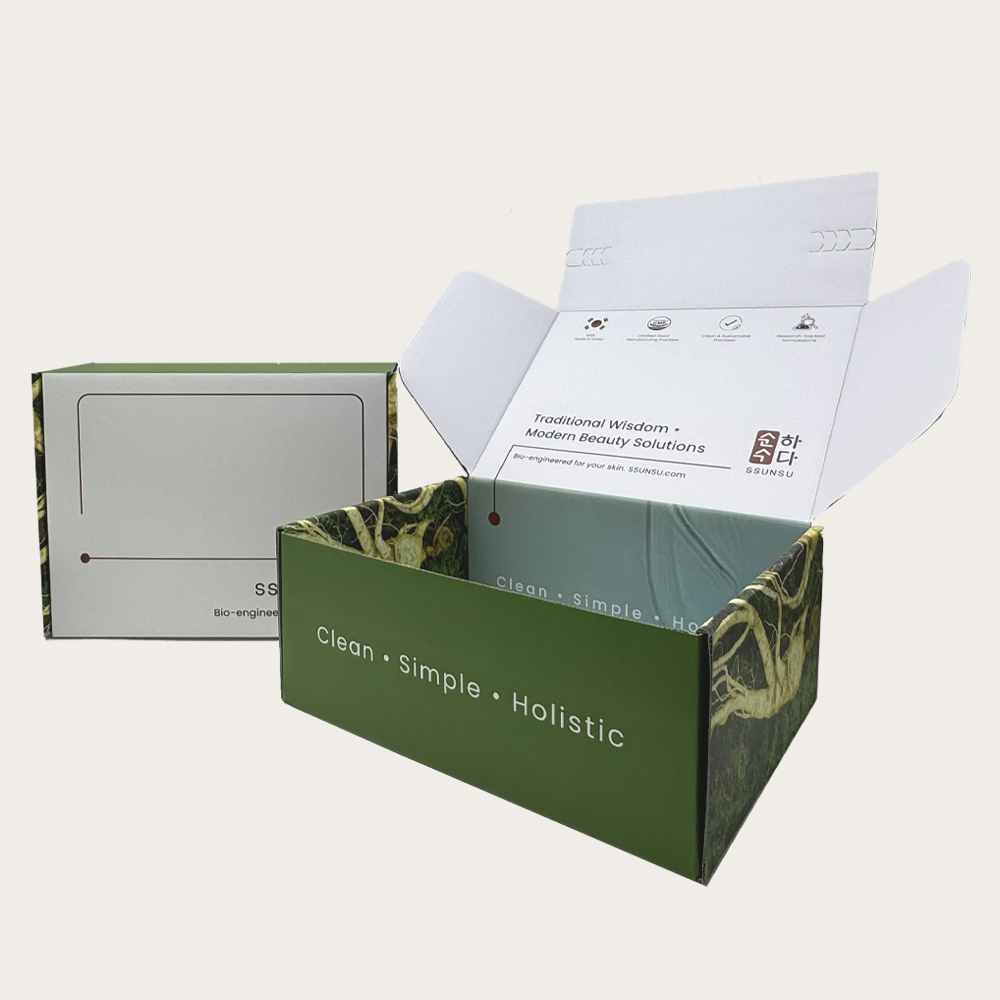
A corrugated mailer box has one non-negotiable job: survive a parcel network intact, regardless of how many times it is dropped, stacked, or compressed between the warehouse and the customer's door. At the same time, more e-commerce brands now want that same shipping box to double as a branded unboxing moment, which means procurement needs to balance crush resistance with print quality on a substrate that behaves differently from retail-grade coated board.
This article is written for e-commerce brands, subscription box companies, and distributors sourcing shipping-grade packaging that also needs to represent the brand well when it arrives.
The first problem is under-specifying flute type, which directly determines crush resistance — a box that looks similar on the outside can perform very differently in transit depending on whether it uses B-flute, E-flute, or a double-wall construction. The second problem is expecting retail-quality full-color print results on corrugated board, which has a rougher surface than coated SBS stock and reproduces fine detail differently.
Buyers also frequently discover that a mailer sized too closely to the product leaves no room for protective fill, while one sized too generously increases both material cost and dimensional-weight shipping charges — both are common, avoidable cost problems.
The target buyer includes e-commerce brands shipping direct-to-consumer, subscription box companies needing a consistent monthly mailer, and distributors or 3PLs sourcing shipping cartons for multiple client brands. Each should weigh crush resistance requirements against branding ambitions, since heavier double-wall board adds protection but also adds shipping weight and cost.
Because dimensional weight pricing directly affects shipping cost, buyers should size the mailer as close to the product footprint as protective fill allows, rather than defaulting to a larger, more generic box size.
Before sampling, buyers should confirm flute type (B-flute, E-flute, or double-wall for heavier or fragile products), board weight, print method (flexographic for simple designs versus digital or litho-laminate for detailed full-color branding), and closure style (tuck flap, tape closure, or self-locking base). These parameters directly affect both protection and cost.
A complete RFQ should include product weight and dimensions, fragility level, target shipping carrier or method, and order volume. Buyers should ask the factory for a crush-test or drop-test reference relevant to their product weight before committing to a flute selection.
Branding on corrugated board is best achieved through litho-laminate printing (a high-quality printed sheet laminated onto the corrugated board) for detailed full-color designs, while direct flexographic printing on the corrugated surface is more cost-effective for simpler one- or two-color designs. Buyers should match the printing method to how detailed their branding needs to look.
Interior protective elements — corrugated inserts, dividers, or void-fill — should be planned alongside the outer box, since a well-fitted interior structure often reduces the need for loose fill material and improves the unboxing presentation.
The following internal links can be used inside the article body or at the end of the article to guide visitors toward relevant product pages:
Buyers should request a transit or crush-test reference matched to their actual product weight rather than approving a flute selection based on appearance alone, since corrugated performance is primarily a structural engineering question, not a visual one. Sizing the box as close to the product as protective fill allows keeps both material and dimensional-weight shipping costs under control.
Huaisheng produces corrugated mailer boxes across single-wall and double-wall constructions, with both flexographic and litho-laminate printing options for brands wanting a stronger unboxing impression. We recommend confirming flute type against product weight before finalizing a design.
B-flute or E-flute suits most lightweight to medium-weight products, while double-wall construction is recommended for heavier or more fragile items.
Yes, through litho-laminate printing, which applies a high-quality printed sheet to the corrugated surface for more detailed, full-color designs than direct flexographic printing.
Because many carriers charge by dimensional weight, sizing the mailer close to the product footprint — while still allowing room for protective fill — helps control shipping cost.
Corrugated mailer box sourcing depends on matching flute type and construction to actual product weight and fragility, while choosing a printing method that fits the brand's unboxing ambitions and budget. Buyers who confirm crush performance and size the box efficiently avoid both damaged shipments and unnecessary shipping cost. The recommended next step is sharing product weight, dimensions, and fragility level for a flute and structure recommendation.