Contact Us

Contact Us

Guangzhou Huaisheng Packaging Co.,Ltd.
We provide customers with quality products and provide high-quality services.
If you would like to leave us a comment please go to contact us
+86-18122240089


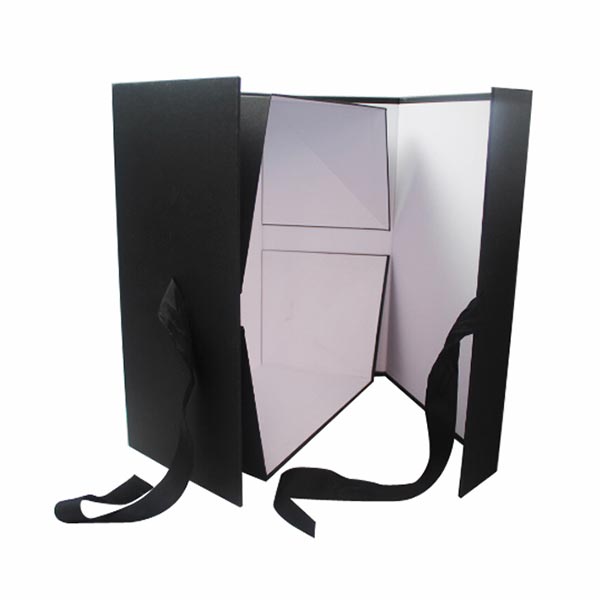
Garments are soft and bulky, which makes them awkward to package well. A folded shirt, a knitted sweater, or a wedding dress each needs a box that is large enough to avoid creasing but not so large that it wastes material and shipping volume. Apparel packaging also carries the brand's first impression, especially for gifts and bridal pieces.
This article is written for clothing brands, bridal and formalwear labels, uniform and corporate gift suppliers, and e-commerce sellers who need custom garment boxes.
The first problem is sizing based on the flat garment, not the folded product plus tissue. A box that is slightly too small crushes the fabric and forces staff to push the lid shut. The second problem is bulk: large boxes cost more to ship, so brands that do not plan a flat-pack or collapsible structure pay for air.
Another issue is weight and sturdiness. A large rigid box that is carried by hand needs a reinforced lid and base, while a thin box can bow. Finally, buyers often overlook the inside, where tissue, a ribbon, or a printed card shapes the unboxing experience as much as the box itself.
The target buyer includes fashion and activewear brands, bridal labels, hosiery and underwear suppliers, uniform and merchandise companies, and gift sellers. A bridal label wants a large, elegant box that protects delicate fabric, while an e-commerce brand wants efficient, repeatable sizes that pack quickly.
Because garments come in many sizes, brands often standardize on two or three box sizes and use tissue and inserts to adapt the fit, rather than a different box for every product.
Before sampling, confirm the folded dimensions of the largest and smallest garment, box structure (lid-and-base, magnetic folding, or foldable), board thickness, wrap material, finishing, and any window, ribbon, or handle. Allow space for tissue paper and a card.
A complete RFQ should include quantity per size, print details, packaging method (flat or assembled), freight method, and the date needed. Ask whether a foldable structure can ship flat to cut freight, and request a sample to check how the garment sits and how easy the box is to close.
A collapsible box that ships flat and is assembled at the point of use is a practical choice for large garments. Magnetic closures give a premium feel, while a ribbon or a printed band adds presentation without adding structural complexity. Inside, a paper insert or tissue wrap helps keep the garment neat.
Wrinkles are the enemy. Minimize the number of folds, use acid-free tissue for delicate items, and test the garment after a few days in the box. Print should avoid dark inks that could rub onto light fabrics.
The following internal links can be used inside the article body or at the end of the article to guide visitors toward relevant product pages:
Weigh, fold, and photograph your real garments before specifying the box. Choose a small number of sizes that cover most of the range and use tissue and inserts to adapt, which keeps tooling and inventory manageable.
Huaisheng produces foldable and rigid garment boxes in custom sizes, including large bridal formats. Share your folded sizes and quantities and we will propose a structure that protects the garment and keeps freight costs in check.
Large enough for the folded garment plus tissue without pressure, with the exact size confirmed by testing the real product.
Yes, foldable and collapsible structures can ship flat and be assembled at the point of use.
Use acid-free tissue, avoid heavy dark ink on interior surfaces, and test with light fabrics.
Apparel and garment boxes work best when sized from the folded product, structured to ship efficiently, and finished to protect delicate fabrics. The next step is to share your folded garment sizes and quantity for a box and freight proposal.